Facebook rejected him in 2009. Five years later it paid up to $19 billion for his app.
In 2009 Twitter and Facebook both turned down engineer Brian Acton. He co-founded WhatsApp, which Facebook agreed to buy in 2014 for up to $19 billion.
Did Facebook reject the WhatsApp co-founder for a job?
Yes. Brian Acton tweeted on 3 August 2009 that Facebook had turned him down. Earlier, on 23 May 2009, he had tweeted that Twitter had also rejected him.

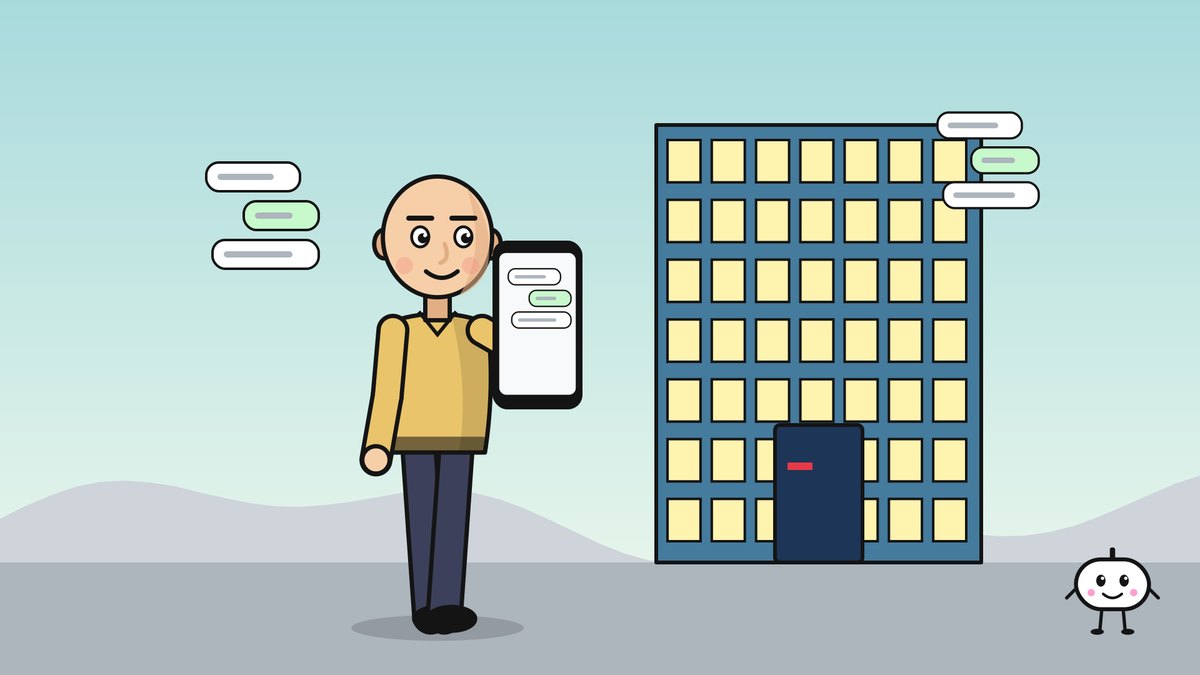
Illustration: an engineer holding a phone full of chat bubbles outside a closed office door.
In this story
On 3 August 2009, a software engineer named Brian Acton posted a short update on Twitter: Facebook had turned him down for a job. He did not complain. He wrote that it had been a great opportunity to connect with some fantastic people, and that he was looking forward to life's next adventure.
Less than five years later, Facebook agreed to pay up to $19 billion for a company Acton had co-founded in the meantime. That company was WhatsApp, the messaging app that more than two billion people would go on to use. This is how a quiet job rejection turned into one of the most talked-about tech deals of its decade.
Who is Brian Acton?
Brian Acton is an American software engineer who studied computer science at Stanford. In the 1990s he joined Yahoo, then one of the biggest names on the internet, and stayed there as an engineer until 2007.
At Yahoo he met Jan Koum, a younger engineer who had moved to California from Ukraine as a teenager. The Associated Press later described how the two bonded over a shared, no-nonsense attitude to work, and how Acton stood by Koum when Koum's mother died of cancer in 2000.
In 2007 both men left Yahoo. They took roughly a year off, travelling in South America and playing Ultimate Frisbee, before thinking about what to do next.
The two rejections of 2009
By 2009 Acton was looking for work. He applied to Twitter first. On 23 May 2009 he tweeted that he had been "denied by Twitter HQ", adding, "That's ok. Would have been a long commute."
A few months later Facebook said no as well. His 3 August 2009 post, reported word for word by DNA India and BGR in 2014, read: "Facebook turned me down. It was a great opportunity to connect with some fantastic people. Looking forward to life's next adventure."
Both posts are short and good-humoured. There is no bitterness in them, no attack on the companies and no public self-pity. That tone is a big part of why the story spread so widely once the ending became known.
How WhatsApp started
The next adventure came from his friend. Jan Koum had noticed how the iPhone and its new App Store were changing what phones could do, and he had an idea for an app built around simple status messages. He started WhatsApp in 2009, and the name was a play on "What's up?"
According to the AP, Acton was jobless and working on a less promising start-up when Koum asked him to join. He did, becoming WhatsApp's co-founder later that year. The goal settled into something simple: let people send messages reliably to friends and family on almost any phone, anywhere in the world.
The two founders were strict about what WhatsApp would not do. Acton wrote a note with the line "No Ads. No Games. No Gimmicks.", and Koum kept it taped to his desk. Koum, who grew up in the Soviet Union, also said he did not want the company to pry into people's conversations. The investment firm Sequoia Capital backed the company early.
The $19 billion deal with Facebook
WhatsApp grew quickly, especially in countries where text messages were expensive. On 19 February 2014 Facebook announced it would buy the company. Its official press release, filed with the US Securities and Exchange Commission, set out the terms: $4 billion in cash and about $12 billion in Facebook shares, plus $3 billion in restricted stock units for WhatsApp's founders and staff, which together came to up to $19 billion.
At the time WhatsApp had more than 450 million monthly users, and more than a million new people were registering every day, according to the same release. Facebook said 70% of users were active on any given day.
Forbes reported that Koum, Acton and Sequoia's Jim Goetz signed the deal papers at a disused building in Mountain View that had once been a social services office, the place where Koum had queued for food stamps as a teenager. The company that had declined to hire Acton in 2009 was now the buyer.
What Brian Acton did next
Acton stayed on after the acquisition and left WhatsApp and Facebook in September 2017. In February 2018 he announced he was putting $50 million into a new non-profit, the Signal Foundation, to support the encrypted messaging app Signal. He became its executive chairman, and Signal's creator, Moxie Marlinspike, remained in charge of the app.
WhatsApp itself kept growing. In February 2020 it announced it had passed two billion users worldwide, making it the second app in Facebook's family to reach that mark, as Business Today and Bloomberg reported.
Why this rejection story matters
Rejection stories are easy to tell backwards, as if the happy ending was always obvious. It was not. In August 2009 Acton was an experienced engineer without a job, turned down by two of the hottest companies in Silicon Valley, helping a friend with a small app that few people had heard of.
What he controlled was his response. He treated each no as a closed door, not as a judgement on his worth. He stayed polite in public, kept good relationships and put his energy into the next real opportunity, even though it was smaller and far less certain than a job at Facebook.
Most rejections will not end in a billion-dollar deal, and that is not the point. The point is that a single no from a single company, on a single day, tells you very little about where you will be in five years.
The money behind it
By Manisha Aggarwal, accounting professional
Facebook's 2014 deal was worth up to $19 billion for WhatsApp, which had more than 450 million monthly users. That is about $42 for each user.
Only $4 billion, about 21%, was cash. About $12 billion was Facebook shares, and $3 billion was restricted stock for founders and staff that they had to stay to earn. As an accountant, I would say the headline number tells you the value. The mix of cash and shares tells you how much risk the sellers took on.
| Total deal value (2014) | up to $19 billion |
|---|---|
| Value per monthly user | about $42 |
| Cash part | $4 billion (about 21%) |
| Acton's later gift to the Signal Foundation (2018) | $50 million |
Figures come from the sources listed below and are rounded. General education, not financial advice.
Try it yourself: inflation calculator · growth-rate (CAGR) calculator
Timeline
- 2007Acton and Jan Koum leave Yahoo and take time off
- 2009Jan Koum starts WhatsApp, named after "What's up?"
- 23 May 2009Acton tweets that Twitter has turned him down
- 3 Aug 2009Acton tweets that Facebook has turned him down; he later joins WhatsApp as co-founder
- 19 Feb 2014Facebook announces a deal to buy WhatsApp for up to $19 billion
- Sep 2017Acton leaves WhatsApp and Facebook
- Feb 2018Acton puts $50 million into the new Signal Foundation
A rejection is one company's answer on one day, not a verdict on your future. Stay gracious, take it as information and put your effort into the next door.
Your check
- Which rejection are you still treating as a final verdict on yourself?
- What is the next door you could knock on this week?
Questions people ask
Did Facebook reject the WhatsApp co-founder for a job?
Yes. Brian Acton tweeted on 3 August 2009 that Facebook had turned him down. Earlier, on 23 May 2009, he had tweeted that Twitter had also rejected him.
How much did Facebook pay for WhatsApp?
Facebook announced on 19 February 2014 that it would buy WhatsApp for $4 billion in cash and about $12 billion in shares, plus $3 billion in restricted stock units for staff, a total of up to $19 billion.
Who founded WhatsApp?
Jan Koum and Brian Acton, who met while working at Yahoo. Koum started WhatsApp in 2009 and Acton joined him as co-founder that year.
What did Brian Acton tweet after Facebook rejected him?
He wrote: "Facebook turned me down. It was a great opportunity to connect with some fantastic people. Looking forward to life's next adventure."
What is Brian Acton doing now?
After leaving Facebook in 2017, Acton put $50 million into the Signal Foundation in 2018 to support the private messaging app Signal, and became its executive chairman.
Sources
- Facebook press release, Facebook to Acquire WhatsApp (SEC filing, 19 Feb 2014)
- DNA India, WhatsApp founder Brian Acton was rejected by Facebook and Twitter before $19 billion deal (Feb 2014)
- BGR, WhatsApp exists thanks to Twitter and Facebook's ignorance (20 Feb 2014)
- Phys.org / AP, WhatsApp founders swap struggle for billionaire status (Feb 2014)
- Forbes (via Communications of the ACM), The rags-to-riches tale of how Jan Koum built WhatsApp into Facebook's new $19 billion baby (Feb 2014)
- YourStory, WhatsApp co-founder invests $50M in Signal (22 Feb 2018)
- Business Today, WhatsApp crosses two billion users worldwide (12 Feb 2020)
Every fact on this page comes from the sources above, and every number is checked in at least two. General education, not personal or financial advice. Spotted an error? Tell us and we will correct it. Read our editorial standards.