
Big Decisions
Turning down Netflix, passing on the Beatles, selling a stake in Apple for a few hundred dollars: these decisions look obvious now. This collection asks how they looked at the time.
Each story sets out what the decision-makers knew, what they could not have known, and how the alternative would have played out on the information available then. We also test popular claims and statistics against the original research, and say so when a well-known story turns out to be wrong.
It is the most direct use of borrowed hindsight: learning to judge a decision by the reasoning behind it, not only by how it turned out.
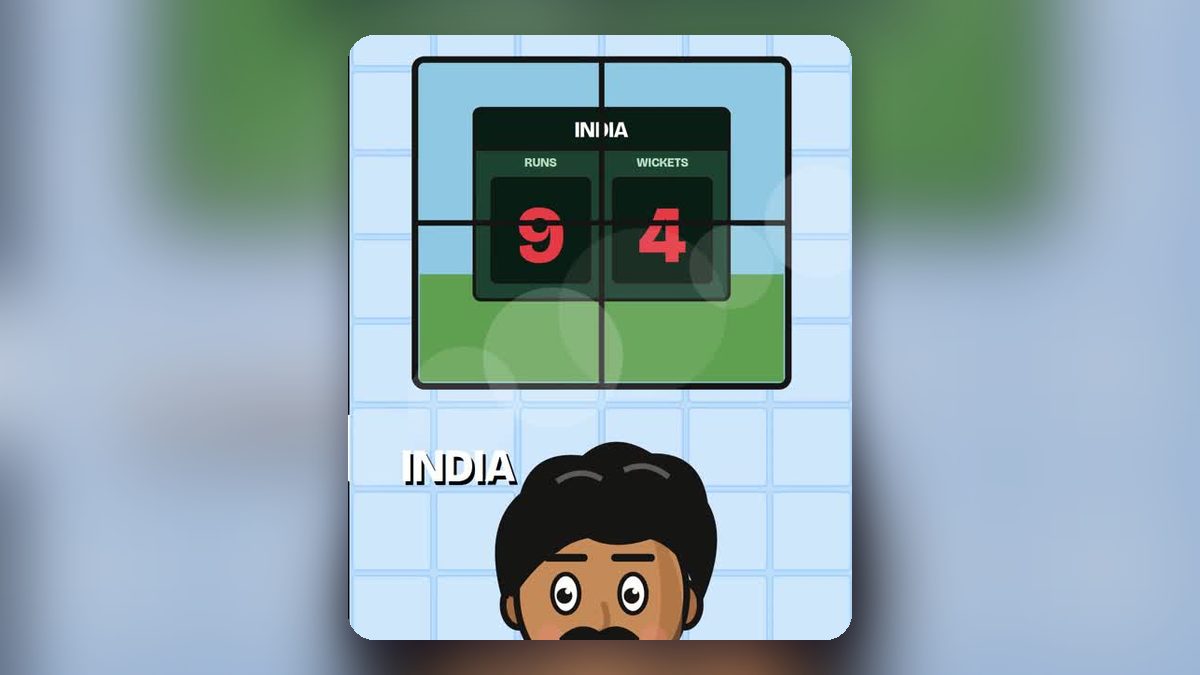
9 for 4, then 17 for 5: the innings nobody filmed
India were 9 for 4 at the 1983 World Cup when Kapil Dev walked in. His 175 not out is the innings no camera filmed. The full story, with sources.
4 min read
A bus driver offered to pay him to quit. He went.
Before he was Rajinikanth, he was a Bangalore bus conductor. His driver pushed him towards film school and helped with the money. The sourced story.
3 min read
Did Ford Humiliate Ratan Tata in Detroit? What the Record Shows
Tata really bought Jaguar Land Rover from Ford for $2.3 billion in 2008. The 1999 Detroit 'humiliation' is disputed. Here is what each side says.
4 min read
He quit Wall Street to sell books online. His boss had one line for him.
In 1994 Jeff Bezos had a senior job at a New York hedge fund. His boss said his idea suited someone without a good job. Here is how he decided to go.
4 min read
Kodak held back the digital camera. Its own engineer invented it.
In 1975 Kodak engineer Steve Sasson built the first self-contained digital camera. Kodak, a film company, moved slowly. What that teaches about best sellers.
4 min read
His game flopped. Its chat tool sold for $27.7 billion.
Stewart Butterfield's game Glitch shut down in 2012. The chat tool his team built while making it became Slack, which Salesforce bought for $27.7 billion.
4 min read
Decca said no to the Beatles. Then it signed the Rolling Stones.
On 1 January 1962 Decca auditioned the Beatles and turned them down. A year later the same executive signed the Rolling Stones. Here is the full story.
4 min read
They could've bought Netflix for $50 million. Saying no made sense.
In 2000 Netflix offered itself to Blockbuster for $50 million. With what Blockbuster knew then, saying no looked sensible. Here's what changed after.
4 min read
Do 70% of lottery winners really go broke?
It's one of the most-shared money stats online. The group it's credited to says its research doesn't back it. Here's what studies actually found.
4 min read
He sold 10% of Apple for $800. Was it a mistake?
Ronald Wayne co-founded Apple, then gave up his 10% stake for $800 within two weeks. Hindsight says disaster. What he knew at the time says something else.
4 min read