He quit Wall Street to sell books online. His boss had one line for him.
In 1994 Jeff Bezos had a senior job at a New York hedge fund. His boss said his idea suited someone without a good job. Here is how he decided to go.
Why did Jeff Bezos quit his job at D. E. Shaw?
In 1994 he read that web usage was growing 2,300% a year and wanted to start an online bookstore. He decided using what he called a regret minimization framework: at 80 he would not regret trying and failing, but he might regret never trying.

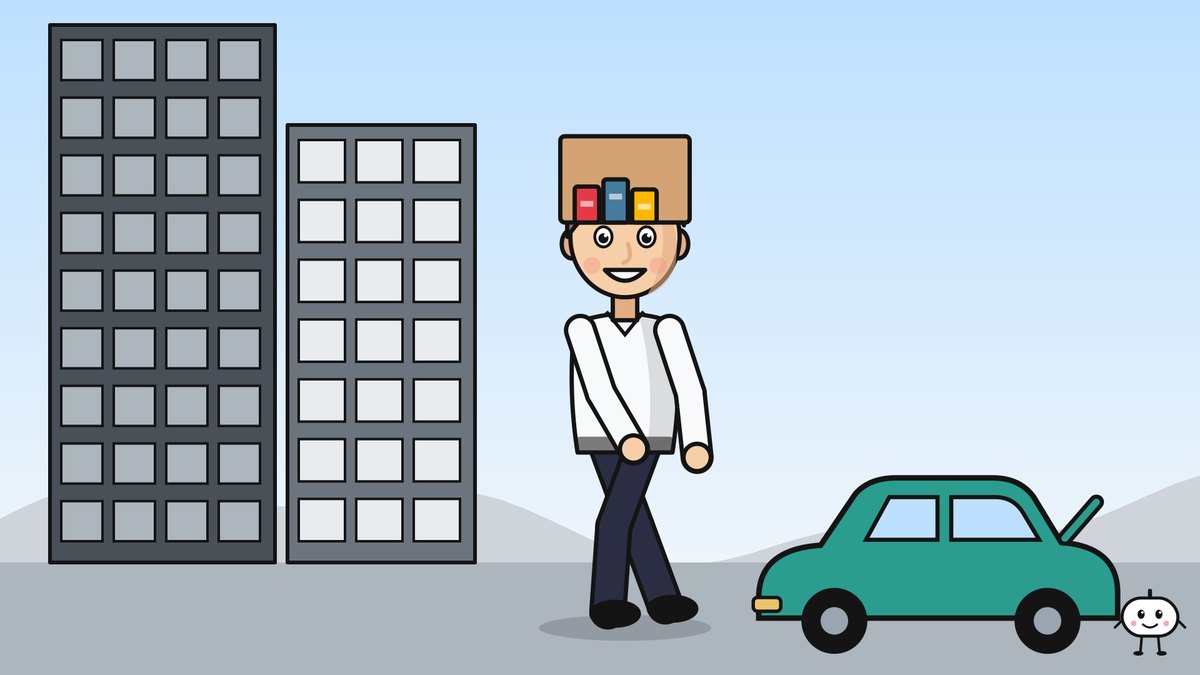
Illustration: a man walking away from city office towers carrying a box of books to his car.
In this story
In 1994 Jeff Bezos walked through Central Park with his boss, David Shaw, and explained why he wanted to leave a well-paid job on Wall Street to sell books on the internet. Shaw listened carefully. Then, as Bezos later told Princeton graduates, he said: "That sounds like a really good idea, but it would be an even better idea for someone who didn't already have a good job."
It was a fair point, and Bezos took it seriously. The way he finally made up his mind has since become one of the most quoted decision-making tools in business: picture yourself at 80 and ask which choice you would regret.
Who was Jeff Bezos before Amazon?
Bezos was born in January 1964 in Albuquerque, New Mexico. He studied electrical engineering and computer science at Princeton, graduating in 1986, and worked at a few firms before joining D. E. Shaw & Co. in New York in 1990.
D. E. Shaw was an investment firm that used computers and mathematical models to trade. Bezos rose quickly and became a senior vice president, which Britannica says made him reportedly the firm's youngest. He met his future wife, MacKenzie, at the firm, where she worked as a research associate.
Part of his job was to look for new business opportunities on the young internet. According to HistoryLink, the Washington state history encyclopedia, he and David Shaw had even discussed the idea of an online "everything store".
The 2,300% statistic that started it
In the spring of 1994, Bezos came across a figure that stopped him. In his own words to Princeton's class of 2010: "I came across the fact that Web usage was growing at 2,300 percent per year." At the time very few people had ever bought anything online.
He started listing products that could be sold on the web and settled on books. There were millions of titles in print, far more than any physical shop or mail-order catalogue could hold, but a website could list them all. Books were also easy to describe, and in the early days Amazon simply ordered each book from a distributor after a customer bought it.
What his boss told him
When Bezos told Shaw he planned to leave and start an online bookstore, Shaw did not dismiss the idea. He took him on that long walk in Central Park and gave his honest view: good idea, but a better one for someone who did not already have a good job.
HistoryLink adds that Shaw asked him to think it over, and pointed out that D. E. Shaw itself might one day compete in the same space. Bezos was leaving a senior role, a reliable salary and, since he was going in the middle of the year, his annual bonus.
What is the regret minimization framework?
Bezos explained his thinking years later in an interview with the Academy of Achievement, and Business Insider has quoted the same words. "I wanted to project myself forward to age 80 and say, 'OK, I'm looking back on my life. I want to minimize the number of regrets I have.'"
He went on: "I knew that if I failed, I wouldn't regret that. But I knew the one thing I might regret is not ever having tried." He joked that only a nerd would call this a "regret minimization framework", but the name stuck.
The useful part of the test is that it changes the question. Instead of asking "What if this fails?", which tends to favour staying put, it asks which choice you will be glad you made over a whole lifetime. For Bezos, failing at something he believed in felt bearable. Never trying did not.
In the same Princeton speech he summed it up simply: "I took the less safe path to follow my passion, and I'm proud of that choice."
From a Bellevue garage to Amazon.com
In 1994 Jeff and MacKenzie Bezos headed west to Seattle, a city HistoryLink says he chose partly for its pool of software engineers. Business Insider, citing Wired, reports that MacKenzie drove while Jeff typed the business plan on his computer. Accounts differ on exactly where the drive began.
On 5 July 1994 he incorporated the company in Washington state as Cadabra Inc., a name he soon changed to Amazon. The couple rented a house in Bellevue, near Seattle, and the garage became the first office. Amazon says the first desks were made by buying wooden doors from Home Depot and attaching legs, because doors were cheaper than desks.
Amazon.com opened to the public on 16 July 1995, offering more than a million titles. Its first sale was Douglas Hofstadter's book Fluid Concepts and Creative Analogies. Amazon's own press release from October 1995 says that in the first four weeks it shipped books to customers in all 50 US states and more than 45 other countries. The company went public in 1997.
Why this decision still matters
It is easy to look back and say leaving was obvious. In 1994 it was not. Online shopping barely existed, and a respected boss had given him a sensible reason to stay. What Bezos had was a clear way to weigh the choice.
Not every bold move should be made, and not every reader is in a position to leave a stable job. The framework does not say "always take the risk". It asks you to be honest about which kind of regret you can live with, and then to choose on purpose rather than by default.
Timeline
- 1986Bezos graduates from Princeton
- 1990Joins D. E. Shaw & Co. in New York
- Spring 1994Reads that web usage is growing 2,300% a year
- 5 Jul 1994Incorporates Cadabra Inc., soon renamed Amazon
- 1994Moves to Seattle; garage of a rented Bellevue house becomes the first office
- 16 Jul 1995Amazon.com opens to the public
- Oct 1995Amazon reports orders from all 50 states and 45+ countries in its first four weeks
- 1997Amazon goes public
When you are stuck between safe and bold, picture yourself at 80 and ask which choice you would regret not having made. Then decide on purpose.
Your check
- Is there something you keep putting off that 80-year-old you would wish you had tried?
- What is the smallest version of it you could try this year without risking everything?
Questions people ask
Why did Jeff Bezos quit his job at D. E. Shaw?
In 1994 he read that web usage was growing 2,300% a year and wanted to start an online bookstore. He decided using what he called a regret minimization framework: at 80 he would not regret trying and failing, but he might regret never trying.
What did David Shaw tell Jeff Bezos about Amazon?
On a long walk in Central Park, Shaw said: "That sounds like a really good idea, but it would be an even better idea for someone who didn't already have a good job." He asked Bezos to think it over before leaving.
What is the regret minimization framework?
It is a decision test Jeff Bezos described: project yourself forward to age 80, look back on your life, and choose the option that will leave you with the fewest regrets.
Where did Amazon start?
In the garage of a rented house in Bellevue, near Seattle, in 1994. The first desks were wooden doors with legs attached.
When did Amazon open?
Amazon.com opened to the public on 16 July 1995. Its first sale was the book Fluid Concepts and Creative Analogies by Douglas Hofstadter.
Sources
- Princeton University, Jeff Bezos 2010 Baccalaureate Remarks (30 May 2010)
- Academy of Achievement, Jeff Bezos interview: regret minimization framework
- Business Insider India, How Jeff Bezos decides which risks to take
- HistoryLink.org, Amazon: The Early Years (1995-1999)
- Britannica, Jeff Bezos
- Amazon press release, World's largest bookseller opens on the Web (October 1995)
- The National, Amazon's 30th birthday: from an online bookstore to the world's biggest marketplace (5 Jul 2024)
Every fact on this page comes from the sources above, and every number is checked in at least two. General education, not personal or financial advice. Spotted an error? Tell us and we will correct it. Read our editorial standards.