
Human Limits
For years, experts said a four-minute mile, a two-hour marathon or a new way of jumping could not work. This collection tells the stories of the people who proved otherwise, and of the preparation behind each record.
We report times, distances and dates from official records and reputable sports reporting, checked in at least two sources, and we explain what made each breakthrough possible: training, technique, teamwork or a different way of thinking about the problem.
The borrowed lesson is usually about limits we accept without testing them.
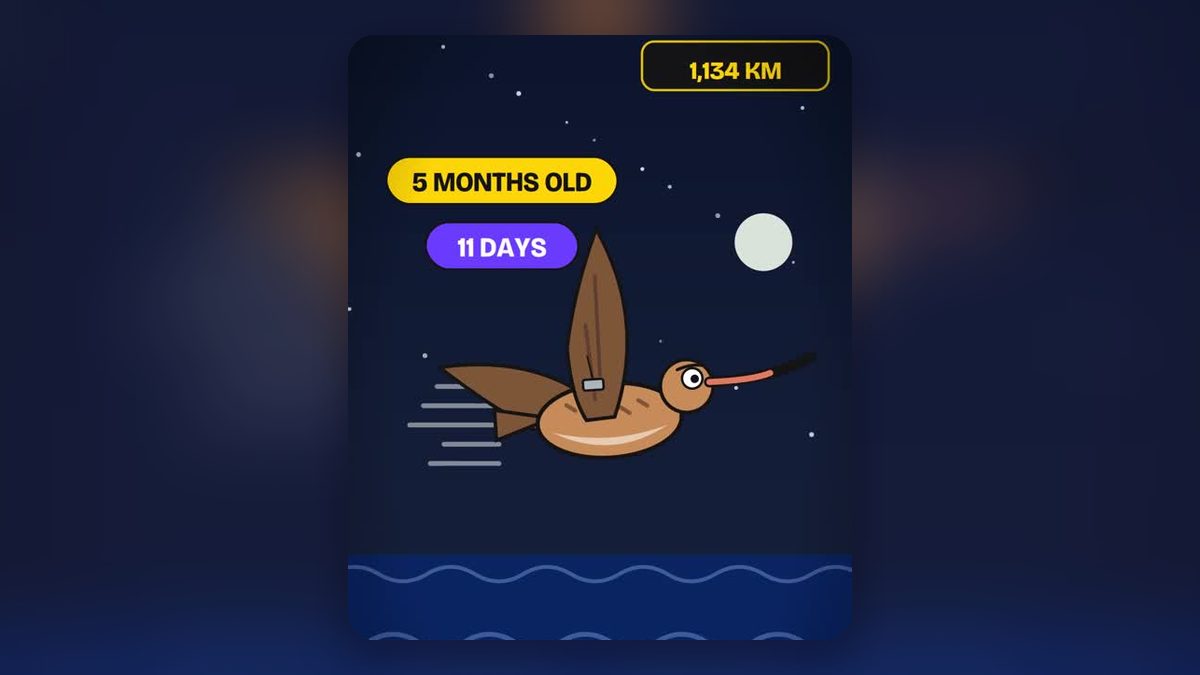
The Five-Month-Old Bird That Flew 13,560 km Without Landing: The Bar-Tailed Godwit's Record Flight
A five-month-old bar-tailed godwit flew from Alaska to Tasmania without landing once: at least 13,560 km in 11 days. The true story of the record.
4 min read
Inky the Octopus: The Night He Slipped Out of New Zealand's National Aquarium and Went Back to the Sea
Inky the octopus slipped out of his tank at New Zealand's National Aquarium, crossed the floor and went down a 50-metre drain pipe to the Pacific. The true story.
4 min read
Alex Honnold: 3,000 Feet, No Rope, and the Year of Practice Nobody Saw
Alex Honnold climbed El Capitan with no rope in 3 h 56 min in 2017. His first try ended in under an hour. Here is the practice behind it.
4 min read
The first mile under four minutes, run by a medical student
Roger Bannister missed the medals at the 1952 Olympics. Training in short lunch-break sessions around medical school, he ran the first sub-four-minute mile.
4 min read
A rice farmer's daughter in cheap spikes: how Hima Das won world 400 m gold
Hima Das, a rice farmer's daughter from Dhing, Assam, was no better than fourth on the last bend of the 2018 World U20 400m final. She won gold in 51.46.
4 min read
The avalanche hit. She kept climbing: Bachendri Pal on Everest
An avalanche hit her Everest camp in May 1984 and more than half the team turned back. A week later Bachendri Pal stood on the summit.
4 min read
He missed by 25 seconds. Two years later he ran a marathon under two hours.
In 2017 Eliud Kipchoge missed a two-hour marathon by 25 seconds. On 12 October 2019 in Vienna he ran 1:59:40, the first human under two hours.
4 min read
Is the 10,000-hour rule true? What the research actually found
The 10,000-hour rule says practice makes you world-class. The scientist behind the original study said it was oversimplified. Here is what the research shows.
4 min read