Inky the Octopus: The Night He Slipped Out of New Zealand's National Aquarium and Went Back to the Sea
Inky the octopus slipped out of his tank at New Zealand's National Aquarium, crossed the floor and went down a 50-metre drain pipe to the Pacific. The true story.
How did Inky the octopus escape?
During maintenance the lid of his tank was left slightly open. After dark he climbed out, crossed the floor to a drain hole about 15 cm wide, and went down a pipe of about 50 metres that leads to the Pacific Ocean.

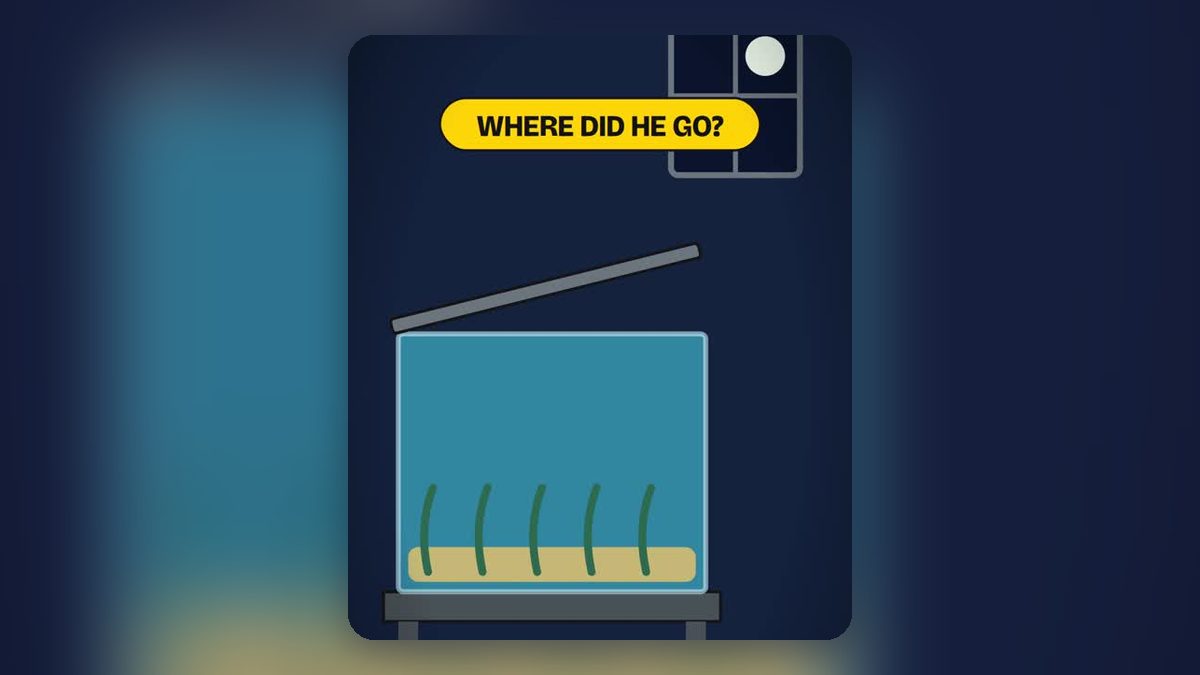
Illustration from the Borrowed Hindsight video about this story.
In this story
- Who was Inky the octopus?
- How did Inky escape from the aquarium?
- How can an octopus fit through such a small hole?
- Was the escape surprising to scientists?
- Myth vs fact: what the viral versions get wrong
- What Inky's escape teaches us (and how to find your own gap)
- Timeline
- The borrowed hindsight
- Questions people ask
- Sources
One night, after the staff at the National Aquarium of New Zealand in Napier had gone home, a common octopus called Inky found that the top of his tank was not quite closed. By the next morning he was gone. The only clue was a trail across the floor, leading to a drain hole about 15 centimetres wide.
That drain fed a pipe of about 50 metres that ran straight back to the Pacific Ocean. Nobody saw him leave, and he was never seen again. When the aquarium told the story in April 2016, about three months later, it travelled around the world.
Who was Inky the octopus?
Inky was a common New Zealand octopus who had lived at the National Aquarium in Napier since 2014. He did not arrive in perfect shape. Fishermen caught him in a crayfish (rock lobster) pot off Pania Reef, near Napier, and he came in scarred and battle-worn. The Associated Press reported that two of his arms were about half their normal length, probably after an attack by a fish.
He recovered at the aquarium and became a favourite with staff and visitors. The aquarium's manager, Rob Yarrall, described him to National Geographic as "very inquisitive", an octopus who "liked to push boundaries". He also told the AP that Inky would come up to the surface so keepers could hand-feed him.
How did Inky escape from the aquarium?
Reports agree on the main steps. During maintenance work, the lid of Inky's tank was left slightly open (RNZ, TIME and CBC all describe it this way; the AP describes a small gap at the top of the tank). At some point after dark, Inky climbed out through that gap.
He then crossed the floor to one of the drain holes used to return water to the sea. The hole was about 150 millimetres (6 inches) across, according to both RNZ and the AP. He squeezed into it and travelled down a pipe of roughly 50 metres (164 feet), reported by both CBC and the AP, which empties into the Pacific Ocean off Napier.
Nobody watched any of this happen. Staff worked out the route the next day from the wet trail he left behind. When they checked the pipework, he was already gone.
How can an octopus fit through such a small hole?
An octopus has no bones. Its body is soft, so it can change shape and push through openings that look far too small for it. National Geographic noted that this is exactly why octopuses are such good escape artists, and Yarrall told the AP that an octopus can get through almost any opening larger than its beak, the one hard part of its body.
Inky's body was described by the AP as about the size of a rugby ball. A 6-inch drain looks impossible for an animal that size. For an octopus, it was simply a way through.
Was the escape surprising to scientists?
Not really. James Wood, a marine biologist quoted by National Geographic, said Inky's escape was not surprising, because octopuses are very intelligent and learn quickly. He described octopuses that had escaped from closed tanks before, including one in Bermuda that repeatedly left its own tank to eat animals in nearby ones.
The aquarium said Inky was not unhappy or lonely; octopuses live alone in the wild, and Yarrall's view was that Inky simply wanted to know what was outside. The aquarium also said it did not plan to replace him.
Myth vs fact: what the viral versions get wrong
Myth: someone saw Inky make a daring dash across the room. Fact: no one saw him leave. The whole route was reconstructed later from his trail.
Myth: he planned the escape for months. Fact: nobody can know what an octopus planned. What is reported is simpler and more useful: the lid was not fully closed, a drain was nearby, and he used both. We have stuck to what the sources printed.
What Inky's escape teaches us (and how to find your own gap)
We usually look for a big, obvious door: the perfect job offer, the big break, the person who opens everything for us. Inky did not need a big door. He needed one small gap and the willingness to squeeze through it.
Most of us have a few gaps like that already: an email we never followed up, a person who once said "ask me anytime", a short course, a small side project. They don't look like much. That is exactly why they get ignored. If you want to see how small starts grow, read how Payeng planted a forest by himself at He planted a forest by himself: Jadav Payeng and Molai forest.
Try a simple exercise. Write down three doors that are already slightly open for you: a conversation that ended with "let's stay in touch", a skill you are halfway through learning, an offer someone made that you never took up. Don't judge them yet; just list them.
Then pick the smallest one and take one step through it before the week ends: send the follow-up, book the class, ask the question. Inky did not wait for a bigger drain. A small opening, used, beats a big one you are still waiting for.
Timeline
- 2014Fishermen catch an injured octopus in a crayfish pot off Pania Reef; he arrives at the National Aquarium of New Zealand, Napier, and is named Inky
- Early 2016After dark, with the tank lid left slightly open during maintenance, Inky climbs out, crosses the floor and goes down a drain pipe to the Pacific
- Next morningStaff find his trail across the floor and check the pipework; he is gone
- April 2016The aquarium tells the story; it is reported worldwide by RNZ, National Geographic, TIME, CBC and the AP
Look for the gap. The way forward is often smaller than you think, and it may already be half open.
Your check
- What is one door in your life that is already half open, and what is the first small step through it this week?
Questions people ask
How did Inky the octopus escape?
During maintenance the lid of his tank was left slightly open. After dark he climbed out, crossed the floor to a drain hole about 15 cm wide, and went down a pipe of about 50 metres that leads to the Pacific Ocean.
When did Inky the octopus escape?
Early in 2016. The National Aquarium of New Zealand made it public in April 2016, about three months after the escape.
Where is the aquarium Inky escaped from?
The National Aquarium of New Zealand in Napier, on the east coast of New Zealand's North Island, close to the sea.
How can an octopus fit through a small hole?
Octopuses have no bones, so their soft bodies can squeeze through very small openings. The aquarium's manager said they can get through almost any gap larger than their beak.
Was Inky ever found?
No. Staff found only his trail. According to reports at the time, he was not seen again after he went down the drain.
Sources
- Escaped octopus 'didn't even leave us a message', RNZ, 12 Apr 2016
- Inky's Daring Escape Shows How Smart Octopuses Are, National Geographic, 14 Apr 2016
- Sneaky Octopus Escapes From New Zealand Aquarium, TIME, 12 Apr 2016
- Finding Inky, CBC News, 2016
- So long, suckers! Inky the octopus makes an amazing escape, Associated Press via KSL, Apr 2016
Every fact on this page comes from the sources above, and every number is checked in at least two. General education, not personal or financial advice. Spotted an error? Tell us and we will correct it. Read our editorial standards.