The avalanche hit. She kept climbing: Bachendri Pal on Everest
An avalanche hit her Everest camp in May 1984 and more than half the team turned back. A week later Bachendri Pal stood on the summit.
Who was the first Indian woman to climb Mount Everest?
Bachendri Pal, a mountaineer from Uttarakhand, reached the summit of Everest at 1:07 pm on 23 May 1984. She was part of Everest '84, India's first mixed-gender Everest expedition.


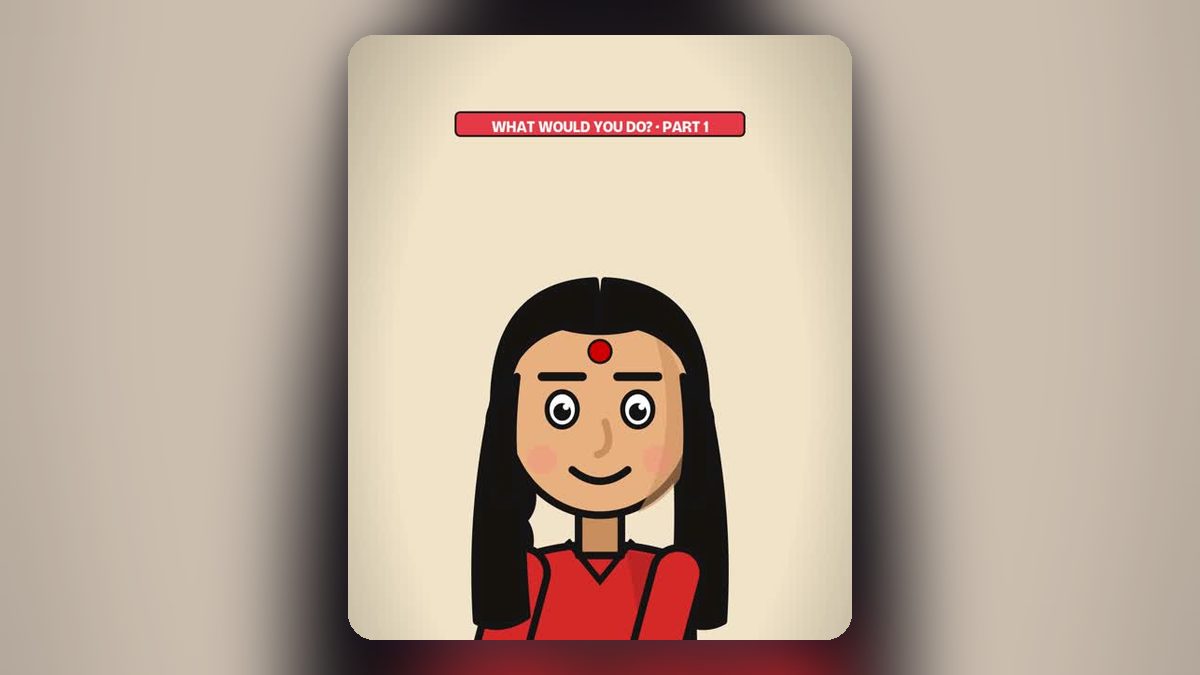
Illustration from the Borrowed Hindsight video about this story.
In this story
At about half past midnight on 16 May 1984, the members of India's Everest expedition were asleep in their tents at Camp III, around 24,000 feet up on the Lhotse face. Then came a sound like an explosion. An avalanche tore through the camp, burying tents and injuring almost everyone inside.
Bachendri Pal was one of them. A week later, on 23 May, she was standing on the summit of Mount Everest, the first Indian woman ever to do so.
Who is Bachendri Pal?
Bachendri Pal was born on 24 May 1954 in Nakuri, a village in what is now Uttarakhand. She was one of seven children in a working-class family. Her father, Kishan Singh Pal, was a small border trader who carried groceries by mule into Tibet.
Money was always short, and Pal learned stitching and sewed clothes to help pay for her studies. She was a strong student and went on to earn an MA in Sanskrit and a B.Ed. She was the first person in her village to complete an MA.
The mountains came early. At about 12, she and a group of classmates climbed a peak of nearly 4,000 metres and ended up stranded overnight. It was an adventure that stayed with her.
From teacher's path to mountaineer
Her family expected her to become a teacher, and many relatives saw climbing as no career for a young woman. In a 2016 interview with The Week she remembered her mother calling the plan risky and doubting she would return alive. She later said: "Breaking the stereotype and coming out of that mindset was tougher than climbing Mount Everest."
She joined a course at the Nehru Institute of Mountaineering in Uttarkashi in 1982, at 28, and earned an A grade. Her performance there, and on a selection camp in the Garhwal Himalaya, earned her a place on Everest '84, India's first Everest expedition to include both men and women. The team included six women.
What happened in the 1984 Everest avalanche?
The expedition began its push up the mountain in early May 1984. On the night of 15-16 May, the avalanche struck Camp III on the Lhotse glacier. Pal later described being jolted awake by something hitting her hard. Everyone survived, but many were hurt, and more than half the team had to give up the climb because of injuries or exhaustion.
When she was asked whether she wanted to quit, Pal said no. Speaking to The Week years later, she explained her thinking simply: "I thought that since I did not die in this incident, I have no reason to step back."
It is worth noticing what that decision was not. It was not bravado or a refusal to feel fear; she has said she was scared. It was a calm judgement that the setback had not removed her ability to continue, so it should not remove her goal either.
How Bachendri Pal reached the summit on 23 May 1984
On 22 May she set off from the higher camps with the Sherpa sirdar Ang Dorjee and a few remaining climbers. She was the only woman in the group. They spent the night at the South Col, the last camp below the summit, and set out for the top at 6:20 the next morning, in temperatures well below minus 30 degrees Celsius.
In her autobiography, Everest: My Journey to the Top, she recorded the moment: "And at 1.07 pm on 23 May 1984, I stood on top of Everest, and I was the first Indian woman to have done so." The next day, 24 May, was her 30th birthday.
Later that year she received the Padma Shri, one of India's highest civilian honours.
What Bachendri Pal did after Everest
Pal did not treat the summit as an ending. She spent more than three decades with Tata Steel running its adventure programmes, becoming director of the Tata Steel Adventure Foundation in Jamshedpur, which trains people in mountaineering and leadership. She retired in May 2019. Climbers she trained include Arunima Sinha and Premlata Agarwal, both later Everest summiteers.
In 1993 she led the Indo-Nepalese Women's Everest Expedition. According to Tata Steel, 18 people reached the summit on that one expedition, seven of them women. In 1994 she led an all-women rafting voyage down the Ganga from Haridwar to Kolkata, and in 1997 an all-women trek across the length of the Himalayas, from Arunachal Pradesh to the Siachen Glacier.
The honours kept pace: the Arjuna Award in 1986 and the Padma Bhushan, India's third-highest civilian award, in 2019.
Why her decision still matters
Most of us will never stand on a collapsing ice slope at night. But almost everyone meets a moment when the team shrinks, a plan breaks or a project takes a hit, and the easy reading is that the attempt is over.
Pal's story separates two things that often get tangled: the setback and the goal. The avalanche changed her team, her plan and her odds. It did not change whether she could still climb. She checked that honestly, and kept going. That honest check, more than courage alone, is what turned a near-disaster into a first for India.
Timeline
- 1954Born on 24 May in Nakuri, in today's Uttarakhand
- 1982Trains at the Nehru Institute of Mountaineering, Uttarkashi
- 16 May 1984Avalanche hits Camp III; more than half the team withdraws
- 23 May 1984Reaches the Everest summit at 1:07 pm, the first Indian woman to do so
- 1984Awarded the Padma Shri
- 1986Receives the Arjuna Award
- 1993Leads the Indo-Nepalese Women's Everest Expedition
- 2019Awarded the Padma Bhushan; retires from Tata Steel
A setback can shrink the team without ending the journey. Ask whether it has actually taken away your ability to continue, not just your comfort.
Your check
- What setback are you treating like a stop sign, when it has only changed the plan?
- If you honestly asked 'can I still do this?', what would the answer be?

Questions people ask
Who was the first Indian woman to climb Mount Everest?
Bachendri Pal, a mountaineer from Uttarakhand, reached the summit of Everest at 1:07 pm on 23 May 1984. She was part of Everest '84, India's first mixed-gender Everest expedition.
What happened to Bachendri Pal's team before the summit?
On the night of 15-16 May 1984 an avalanche struck Camp III, at around 24,000 feet. Many climbers were injured and more than half the team withdrew, but Pal chose to continue.
How old was Bachendri Pal when she climbed Everest?
She was 29. She reached the summit on 23 May 1984, and turned 30 the next day.
What awards has Bachendri Pal received?
She received the Padma Shri in 1984, the Arjuna Award in 1986 and the Padma Bhushan, India's third-highest civilian honour, in 2019.
What did Bachendri Pal do after climbing Everest?
She led adventure programmes at Tata Steel for decades and headed the Tata Steel Adventure Foundation until 2019. She also led the 1993 Indo-Nepalese Women's Everest Expedition and all-women expeditions on the Ganga and across the Himalayas.
Sources
- Encyclopaedia Britannica: Bachendri Pal, Indian mountaineer
- The Week: Breaking stereotype was tougher than climbing Everest (7 Mar 2016)
- The Better India: Bachendri Pal, first Indian woman on Mount Everest (26 Aug 2017)
- Deccan Chronicle: From the hills to the Everest, the journey of Bachendri Pal (2 Jun 2025)
- Tata Steel press release: Tata Steel hosts a grand farewell for Ms Bachendri Pal (23 May 2019)
- Tata Steel press release: Padma Bhushan awardee Bachendri Pal to lead trek marking the 1993 Indo-Nepalese Women's Everest Expedition (13 Apr 2019)
- The Assam Tribune: Bachendri conferred with Padma Bhushan (25 Jan 2019)
Every fact on this page comes from the sources above, and every number is checked in at least two. General education, not personal or financial advice. Spotted an error? Tell us and we will correct it. Read our editorial standards.