9 for 4, then 17 for 5: the innings nobody filmed
India were 9 for 4 at the 1983 World Cup when Kapil Dev walked in. His 175 not out is the innings no camera filmed. The full story, with sources.
How many runs did Kapil Dev score against Zimbabwe in 1983?
He scored 175 not out off 138 balls, with 16 fours and six sixes, and India won by 31 runs.

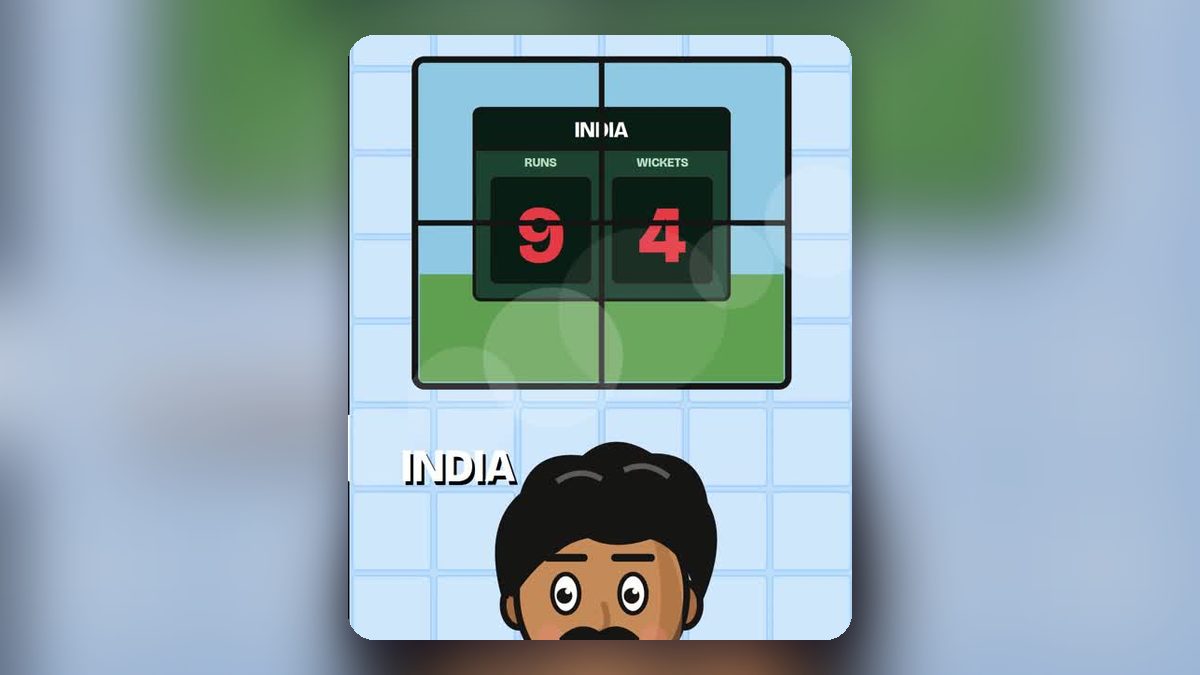
Illustration from the Borrowed Hindsight video about this story.
In this story
18 June 1983, Tunbridge Wells, Kent. India need to beat Zimbabwe to stay alive at the World Cup, and their captain has just been told to hurry. Kapil Dev later said he was rushed out of the shower with very little time to think. Four wickets have gone for 9 runs, and he is next in.
Within a few minutes it is 17 for 5. Most of the people watching expect India to be out before lunch. What happened over the next few hours is still called one of the greatest innings in one-day cricket, and no known video of it exists.
What was at stake in the Zimbabwe match?
India had started the 1983 World Cup well, beating the West Indies by 34 runs in their opening match, according to the ICC. They then beat Zimbabwe in their first meeting, but lost heavily to Australia and again to the West Indies. By the second Zimbabwe game, a defeat would very likely have ended their tournament.
Zimbabwe were not pushovers. They had beaten Australia in their opening match, as The Cricketer's archive piece notes, and the pitch at Tunbridge Wells had a greenish tinge and helped the seam bowlers early on. India won the toss and chose to bat, so the collapse was the captain's own gamble in the making. The ground, a small county venue in Kent, hosted only one international match in its history, according to Deccan Herald, and this was it.
What happened at 9 for 4?
The scorecard shows the damage. Sandeep Patil made 1, caught off Kevin Curran. Peter Rawson then removed Yashpal Sharma for 9, which made it 17 for 5, with Kapil already at the crease. Sandeep Patil later wrote that Kapil had probably expected his turn to come hours later and had gone for a shower.
In The Cricketer's archive interview, Kapil recalls that he was trying to ask his partner what had happened, and that he was quite upset. His own main aim, he says there, was to play out as many overs as possible, to save the team embarrassment and put some total on the board.
Why did Kapil Dev block first and attack later?
This is the choice at the heart of the story. A captain at 17 for 5 can swing at everything and hope, or he can stay and make the bowlers work. Kapil chose patience first.
Ayaz Memon, who was there, remembered that Kapil's first fifty had only a couple of boundaries here and there. The Cricket Monthly describes a long stand with Roger Binny in which Kapil hit no boundaries at all and kept the score moving with singles and twos. Madan Lal then stayed with him as the score crept past 100, and by the time Kirmani joined him it was 140 for 8.
Only when he had the time did the attack begin. With Syed Kirmani, who made an unbeaten 24, he added an unbroken stand of about 126 for the ninth wicket. He reached his hundred in the 49th over and finished with 175 not out off 138 balls, with 16 fours and six sixes. The Cricketer records that India scored at about eight an over in the last 20 overs, and the total was 266 for 8.
How big was the innings at the time?
It was the highest individual score in one-day internationals so far. The Cricketer calls it a world record, and The Cricket Monthly reports that when he passed 171 the umpire, Barry Meyer, told him it was the highest ODI score ever made. Sunil Gavaskar, quoted in the same piece, called it the greatest knock played in a World Cup.
Zimbabwe did not collapse quietly. They were 113 for 6 at one stage and looked out of it, but Kevin Curran made 73 from 93 balls and kept them in the chase until the ninth wicket fell with 37 still needed. India won by 31 runs. Kapil Dev was named player of the match.
Why is there no video of Kapil Dev's 175?
This is the part that makes the innings feel like a legend. No known moving pictures of it exist. Several accounts, including The Cricketer, CricMash and Outlook, say a BBC strike meant the match was not covered that day.
The Cricket Monthly adds that the BBC's cameras were at Lord's for Australia against the West Indies, and that very few people saw the innings in person. Kirmani has said in an interview that he later heard another reason: that the broadcaster did not think two lower-ranked teams were worth showing. Nobody quoted here claims to know for certain, so the honest answer is that the match simply was not filmed.
What happened next?
Two days later India beat Australia by 118 runs at Chelmsford. On 22 June they beat England by six wickets in the semi-final at Old Trafford. On 25 June at Lord's they beat the two-time champions West Indies by 43 runs, defending a total of just 183, according to Wisden's report of the final.
Exactly seven days after the innings nobody filmed, India were world champions. Kapil himself later called the Zimbabwe win a crucial factor in India's rise in the world game, in The Cricketer's archive piece, and the story has been retold ever since by people who were never able to watch it.
Timeline
- Early June 1983India beat the West Indies by 34 runs in the opening match, then lose to Australia and to the West Indies later in the group stage.
- 18 June 1983Against Zimbabwe at Tunbridge Wells India are 9 for 4, then 17 for 5. Kapil Dev scores 175 not out off 138 balls; India make 266 for 8 and win by 31 runs.
- 20 June 1983India beat Australia by 118 runs at Chelmsford.
- 22 June 1983India beat England by six wickets in the semi-final at Old Trafford.
- 25 June 1983India beat the West Indies by 43 runs in the final at Lord's, their first World Cup title.
Sometimes the bravest shot is the one you don't play: stay, steady the innings, and let the big moment come to you.
Your own 9-for-4 day
- When did you last feel you had to swing at everything at once? What would blocking for a while have looked like?
- Who was the 'partner at the other end' that helped you stay in?
Watch this story in under a minute
Animated, narrated, and sourced like this page.
Questions people ask
Did anyone film Kapil Dev's 175 not out?
No known video footage of the innings exists. Reports say a BBC strike meant the match was not covered, and the Cricket Monthly notes that the BBC's cameras were at Lord's for another match that day.
How many runs did Kapil Dev score against Zimbabwe in 1983?
He scored 175 not out off 138 balls, with 16 fours and six sixes, and India won by 31 runs.
Was Kapil Dev really in the shower when India collapsed?
In an interview in The Cricketer's archive he says he was rushed out of the shower with very little time to think, and Sandeep Patil wrote that he probably thought his turn was hours away.
What was India's score when Kapil Dev came in to bat?
India were 9 for 4. They then slipped to 17 for 5 when Yashpal Sharma was out.
What happened after Kapil Dev's 175?
India beat Australia, then England in the semi-final, and won the World Cup by beating the West Indies by 43 runs at Lord's on 25 June 1983.
Sources
- From the archive: Kapil kick-starts the revolution, The Cricketer
- The World Cup classic no one saw, Siddhartha Vaidyanathan, The Cricket Monthly
- 1983: Cricket's greatest underdog story, scripted by Kapil's Devils, ICC
- Prudential World Cup 1983, India v Zimbabwe scorecard, Pakistan Cricket Board
- Prudential World Cup 1983 results, ESPNcricinfo
- Kapil Dev slams 175 not out, Arunabha Sengupta, CricMash
- Prudential World Cup, Tunbridge Wells, June 18, 1983, Outlook
- Kapil Dev's 1983 WC 175 vs Zimbabwe was a miracle, Sandeep Patil, The Quint
- Kirmani says Kapil's unbeaten 175 was the best ODI knock ever, Deccan Herald
- 1983 World Cup final: India v West Indies, Wisden Almanack report
Every fact on this page comes from the sources above, and every number is checked in at least two. General education, not personal or financial advice. Spotted an error? Tell us and we will correct it. Read our editorial standards.