He built 5,127 prototypes. Then the experts said no.
James Dyson built 5,127 prototypes of a bagless vacuum. The big manufacturers still turned it down, and their reason is the real lesson of the story.
How many prototypes did James Dyson make?
He made 5,127 prototypes before his bagless cyclone vacuum worked well enough. Reports put the development period at about four to five years, starting in the late 1970s.

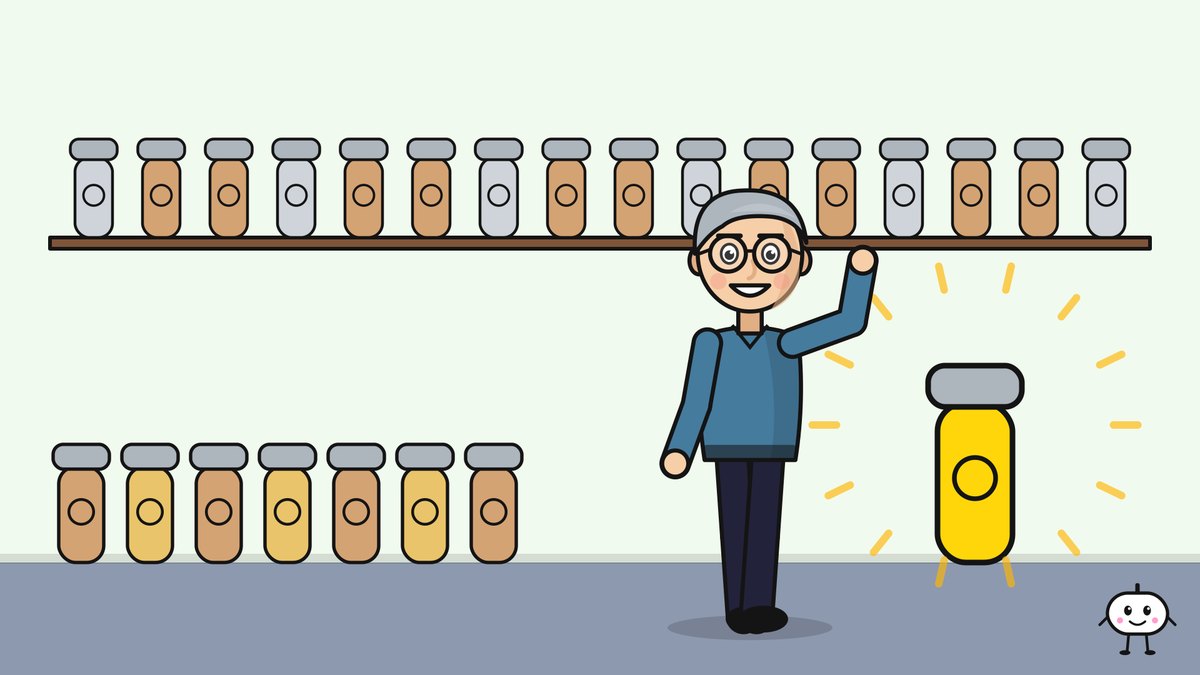
Illustration: an inventor in his workshop surrounded by rows of cardboard vacuum cleaner prototypes.
In this story
By the time James Dyson reached his 3,727th prototype, his wife was giving art lessons to bring in extra money. He had already built thousands of versions of the same machine, and he still had more than a thousand to go.
Dyson later wrote in Wired that by prototype 2,627 the family was "really counting our pennies." The machine he was trying to perfect was a vacuum cleaner without a bag. When it finally worked, the companies best placed to sell it did not want it.
Who is James Dyson?
James Dyson is a British engineer and designer who trained in furniture and interior design in London. Before vacuums, he was known for the Ballbarrow, a wheelbarrow that used a large ball instead of a wheel.
Dyson lost his father when he was nine, and he has said that experience left him with a sense that his future was down to him. He told Entrepreneur that almost every businessperson he spoke to said his vacuum idea was mad.
How the bagless vacuum idea started
The idea came from irritation. In the late 1970s Dyson's own vacuum kept clogging and losing suction, and he could not find a replacement bag. "I loathed changing the vacuum cleaner bag," he told Fortune. The bag, he realised, was the problem: as it clogged with dust, suction dropped.
His answer was to remove the bag entirely and use cyclone separation, spinning the air so fast that dust is thrown out and collected in a bin. Investors who had backed the Ballbarrow would not back this, so he went out on his own, working from a workshop at home.
Why did Dyson make 5,127 prototypes?
Dyson built 5,127 prototypes before he had a design that worked well enough, a figure confirmed by the European Patent Office, Fortune and his own Wired column. Accounts of how long this took range from about four to five years, starting around 1978-79. His first model was made from cardboard and tape.
He tested slowly and carefully. One of the golden rules of development, he said, is to change only one thing at a time between tests. That discipline is why the number is so high: each prototype answered a single question.
The cost was real. He has said that eventually he owed over a million dollars. In Fortune he recalled that bankruptcy did not frighten him because he could always make things, but losing the family home did. His wife, Deirdre, sold paintings and taught art, the family grew its own vegetables, and Encyclopedia.com's Gale profile notes he took a second mortgage on the house to fund the work.
Why vacuum companies rejected Dyson's invention
With a working design, Dyson went to the big manufacturers in Europe and the United States. Several showed early interest, then backed away. Some deals died with in-house lawyers; others simply did not want to change their product lines.
One reason comes up again and again. Replacement bags were a profitable sideline for the major brands. The European Patent Office notes that manufacturers reportedly feared disrupting the market and upsetting bag makers, and a 2001 profile in New Zealand's Management magazine reports that one maker turned him down because it earned too much from selling bags.
Looking back, Dyson told Fortune: "I wasted so much time and money trying to meet with those who are now my competitors." Several of the companies that had turned him down later began making cyclone-style machines of their own.
In other words, the experts were not only judging whether the idea was good. They were also judging what it would cost them if it was.
How Japan kept the idea alive
In 1986 Dyson licensed his design to Apex, a small Japanese company. It sold the machine as the G-Force for 250,000 yen, close to $2,000 at the time, and it became a niche, high-end product.
The royalties mattered more than the sales volume. They paid for further work on the cyclone design back in England. Meanwhile Dyson fought patent cases against companies that had started making similar machines, and in 1991 he settled one with Amway.
The Dyson DC01 and what came next
Banks and venture investors kept saying no. In 1993, after his local bank manager lobbied on his behalf, Lloyds Bank agreed to lend him about $1 million for tooling, according to Fortune. That year Dyson launched the DC01 under his own name in Britain, with a clear bin so customers could see the dirt.
It sold through catalogues and the department store John Lewis. Within about two years, by early 1995, it was Britain's best-selling vacuum cleaner. A machine the industry had rejected was now beating it on its home ground.
Dyson has always said the prototypes were the point, not a waste. "There are countless times an inventor can give up on an idea," he wrote in Wired, adding: "The process bore the fruit. I just kept at it." He has also said that having no money forced him to be creative, since he could not pay for salespeople or advertising and had to sell the machine himself.
The money behind it
By Manisha Aggarwal, accounting professional
James Dyson has said he eventually owed over a million dollars while developing his vacuum. In 1993 Lloyds Bank lent him about $1 million for tooling, about $2.2 million in today's dollars.
Tooling is the expensive part of making a physical product: the moulds must be paid for before a single machine is sold. Before that, a small Japanese company had sold his design under licence as the G-Force, at close to $2,000 each.
| Lloyds tooling loan (1993), today | about $2.2 million |
|---|---|
| G-Force price in Japan | about $2,000 |
| Prototypes before success | 5,127 |
Dollar inflation uses the US consumer price index from the World Bank (series FP.CPI.TOTL, to 2024, the latest year available). Figures are rounded. General education, not financial advice.
Try it yourself: inflation calculator · growth-rate (CAGR) calculator
Timeline
- 1978Frustrated by a clogging vacuum, Dyson starts work on a bagless design
- 1979Begins developing cyclone technology in a workshop at home
- Early 1980sReaches a working design after 5,127 prototypes; major makers decline to license it
- 1986G-Force launches in Japan under licence to Apex
- 1991Settles a patent dispute with Amway
- 1993Launches the Dyson DC01 in Britain
- 1995DC01 is Britain's best-selling vacuum cleaner
When experts say no, ask what they lose if you're right.
When someone turns down your idea, ask:
- Who is saying no, and what would it cost them if I'm right?
- Is there a smaller market, like Dyson's Japan, where I can prove the idea first?
Questions people ask
How many prototypes did James Dyson make?
He made 5,127 prototypes before his bagless cyclone vacuum worked well enough. Reports put the development period at about four to five years, starting in the late 1970s.
Why did vacuum companies reject Dyson's invention?
Major manufacturers earned steady profits from replacement bags, and a bagless machine threatened that business. Some talks also stalled with company lawyers or because firms did not want to change their product lines.
What was the Dyson G-Force?
The G-Force was Dyson's first cyclone vacuum, made under licence by the Japanese company Apex from 1986. It sold for about 250,000 yen, close to $2,000 at the time, and the royalties funded Dyson's further work.
When did the first Dyson vacuum go on sale in the UK?
The Dyson DC01 launched in Britain in 1993. Within about two years it was the country's best-selling vacuum cleaner.
How much debt was James Dyson in?
Dyson has said that while developing the vacuum he eventually owed over a million dollars, and that his biggest worry was losing the family home.
Sources
- Fortune, Dinah Eng: How James Dyson created a $3 billion vacuum empire (9 Sep 2017)
- Entrepreneur, Sherin Shibu: James Dyson was $1 million in debt, but he pursued his 'mad' idea anyway (14 Aug 2025)
- European Patent Office: James Dyson, the bagless vacuum cleaner (European Inventor Award)
- Gizmodo, Jack Loftus: Praising failure, James Dyson talks vacuum's 5,127 prototypes (on Dyson's Wired column, 10 Apr 2011)
- Malaysian Investment Development Authority: Dyson success story
- Encyclopedia.com (Gale, Newsmakers 2005): Dyson, James
- Management magazine (NZ): Doing Dyson (13 Nov 2001)
Every fact on this page comes from the sources above, and every number is checked in at least two. General education, not personal or financial advice. Spotted an error? Tell us and we will correct it. Read our editorial standards.