$50 from his dad. Shoes in his trunk. It became Nike.
Phil Knight borrowed $50 from his father to order running shoes from Japan and sold them from his car trunk. That tiny import business became Nike.
How did Phil Knight start Nike?
In 1962 he borrowed $50 from his father to order running shoes from Onitsuka in Japan. He sold them from the trunk of his car under the name Blue Ribbon Sports, which later became Nike.

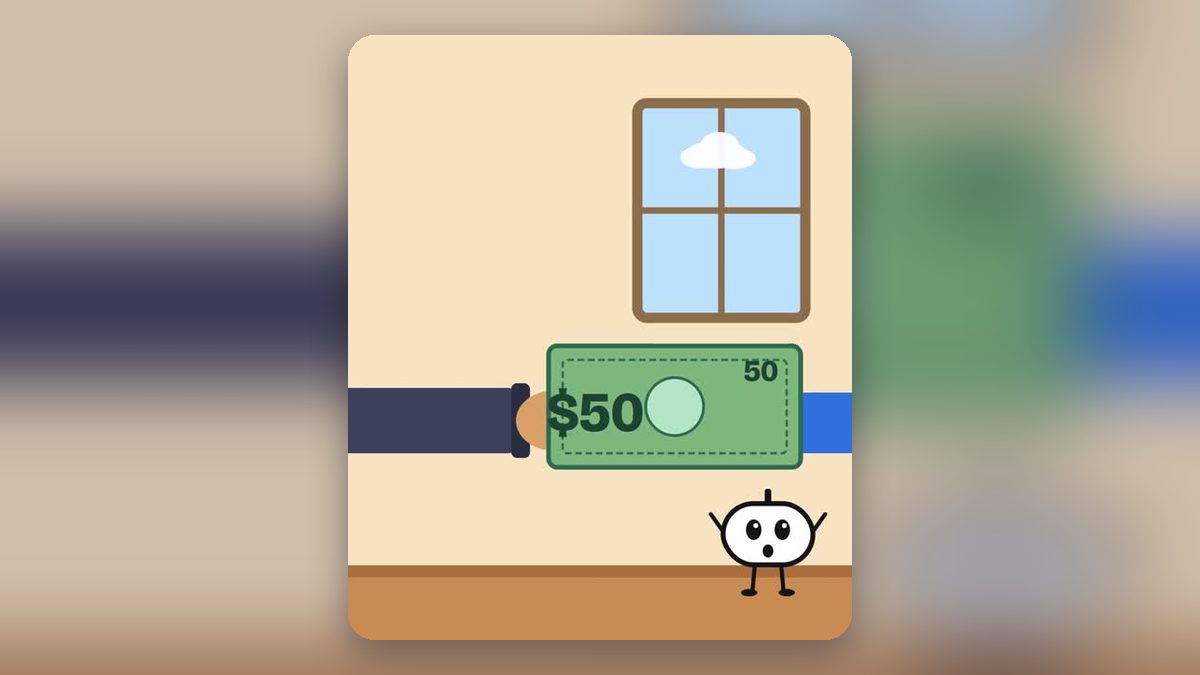
Illustration from the Borrowed Hindsight video about this story.
In this story
In 1962 Phil Knight was 24, had a fresh MBA from Stanford and was living in his parents' house in Oregon. He also had what he would later call a crazy idea: importing good, low-cost running shoes from Japan and selling them to American runners.
To test it, he borrowed $50 from his father. That money paid for his first order of shoes. The company it started is now known around the world as Nike.
Who is Phil Knight?
Before he sold shoes, Knight ran in them. He was a middle-distance runner at the University of Oregon, coached by Bill Bowerman, the university's demanding and inventive track coach. Knight later called Bowerman "part genius, part madman and the best coach I ever had."
Knight then went to Stanford for an MBA. The shoe idea first took shape during his studies, and after graduating he decided to try it for real rather than take a safe job.
The trip to Japan and the $50 order
After graduating, Knight travelled the world, backpacking through Asia, Europe and Africa. In Kobe, Japan, he visited Onitsuka, the company that made Tiger running shoes (it is now part of Asics), and talked his way into a deal to distribute them in the United States.
He named his tiny business Blue Ribbon Sports, of Portland, Oregon. His first order was paid for with the $50 he borrowed from his father.
Then he waited. The shoes took about a year to arrive, far longer than he expected. When they came, Knight sent a pair to his old coach, Bowerman.
Selling shoes from a Plymouth Valiant
Bowerman liked the shoes enough to ask to be part of the business. In 1964 the two became partners in Blue Ribbon Sports, with Bowerman matching Knight's investment, according to the Oregon Sports Hall of Fame.
There was no shop and no warehouse. Knight sold the shoes from the trunk of his Plymouth Valiant, directly to runners who could see and feel the product. In the company's first year of sales, he grossed about $8,000.
The sources disagree slightly about which year that was: the publisher's description of Knight's memoir says 1963, while other histories date the first full year of sales to 1964. Either way, it was a very small business, run by people who still had other jobs. For extra money, Knight also taught accounting at Portland State University.
Slowly, the numbers grew. Blue Ribbon hired a small and eclectic staff, and in 1966 it opened its first retail store. Every pair still came from Onitsuka, which meant the business depended entirely on a supplier thousands of miles away.
How Blue Ribbon Sports became Nike
Growth brought its own problems. In his memoir, Shoe Dog, Knight describes years of cash shortages, banks unwilling to lend more, late deliveries and unclear contracts with Onitsuka. By the early 1970s the relationship with the Japanese supplier had broken down, and Blue Ribbon needed its own brand.
In 1971 Knight met Carolyn Davidson, a design student at Portland State, after overhearing her say she could not afford an oil-painting class. He offered her freelance work, and she designed a stripe for the side of a shoe that suggested movement. She sketched ideas on tissue paper laid over a shoe and presented several options. The company picked one, and she charged $35. It became the Swoosh, first used commercially in June 1971, according to ESPN and Business Insider.
The new name came from Jeff Johnson, one of Blue Ribbon's early employees, who said it came to him in a dream: Nike, after the winged Greek goddess of victory.
Where Nike is today
Blue Ribbon Sports eventually took the Nike name for the whole company. By 2016, when Shoe Dog was published, Nike's annual sales topped $30 billion, according to the publisher. In 1983 the company gave Davidson a gold Swoosh ring and Nike shares to thank her for the logo.
Knight's memoir stands out because it does not pretend the path was smooth. For most of the first decade, the company was small, short of cash and dependent on a supplier it did not control. As Kirkus Reviews summarises it, sales grew through the 1960s, but bankers and Onitsuka itself kept holding the business back, and the memoir ends only when Blue Ribbon becomes Nike.
What the $50 start teaches
The useful part of this story is not the size of Nike. It is how little Knight needed to begin finding out whether his idea worked: a loan from his father, one order of shoes, a car and runners who would buy them.
Starting small kept his early mistakes small too. He learned what customers wanted, what suppliers could deliver and how cash moved through a business, long before any of it was worth much money.
It also shows that the first version of a big company can look nothing like the final one. Blue Ribbon was a distributor of someone else's shoes for years. Knight did not need the whole plan at the start; he needed a first step he could afford, and the willingness to keep taking the next one.
The money behind it
By Manisha Aggarwal, accounting professional
Phil Knight's $50 from his father is worth only about $500 in today's dollars. His first year of sales, about $8,000, would be about $81,000 today. It was a side business run from a car boot, not a company.
The Swoosh logo cost $35 in 1971, about $270 today, possibly the best-value design fee ever paid. By 2016 Nike's yearly sales topped $30 billion. The early years show a familiar pattern: sales grew, but the business kept running short of cash, because growing a stock business ties money up in shoes before customers pay.
| $50 loan (1964), in today's dollars | about $500 |
|---|---|
| First-year sales (about $8,000), today | about $81,000 |
| Swoosh design fee ($35, 1971), today | about $270 |
| Nike's yearly sales (2016) | over $30 billion |
Dollar inflation uses the US consumer price index from the World Bank (series FP.CPI.TOTL, to 2024, the latest year available). Figures are rounded. General education, not financial advice.
Try it yourself: inflation calculator · growth-rate (CAGR) calculator
Timeline
- 1962Knight, 24 and newly graduated from Stanford, visits Onitsuka in Japan and orders shoes with $50 from his father
- 1964Knight and Bill Bowerman become partners in Blue Ribbon Sports
- 1960sKnight sells shoes from the trunk of his Plymouth Valiant, grossing about $8,000 in the first year
- 1971Carolyn Davidson designs the Swoosh for $35
- Early 1970sThe Onitsuka partnership ends and the Nike brand is launched
- 2016Knight publishes his memoir, Shoe Dog
Start with what fits in your car. A small start you keep going beats a big plan you never begin.
Your check
- What could you start this week with almost nothing?
- What are you waiting for that you don't actually need?

Questions people ask
How did Phil Knight start Nike?
In 1962 he borrowed $50 from his father to order running shoes from Onitsuka in Japan. He sold them from the trunk of his car under the name Blue Ribbon Sports, which later became Nike.
How much did Phil Knight make in his first year?
He grossed about $8,000 in his first year of sales. Sources differ on whether that year was 1963 or 1964.
Who co-founded Nike with Phil Knight?
His former University of Oregon track coach, Bill Bowerman, who became his partner in Blue Ribbon Sports in 1964.
How much was the Nike Swoosh logo designed for?
Portland State design student Carolyn Davidson charged $35 for the Swoosh in 1971. In 1983 Nike gave her a gold Swoosh ring and company shares.
What book tells the Nike origin story?
Phil Knight's 2016 memoir, Shoe Dog, tells how the company began and grew, including the cash problems and the break with its Japanese supplier.
Sources
- Stanford Graduate School of Business: Shoe Dog by Phil Knight, MBA '62
- The Japan Times: Shoe Dog review (1 Jun 2019)
- Kirkus Reviews: Shoe Dog (Young Readers Edition) by Phil Knight
- Arab News: Oregonian grit, eccentricity lay foundation for mega sportswear company Nike (2 Jun 2017)
- ESPN: Carolyn Davidson on creating the Nike Swoosh (17 Jun 2016)
- Business Insider India: Nike bought its iconic Swoosh logo design for $35 in 1971
- Oregon Sports Hall of Fame: Philip H. Knight
Every fact on this page comes from the sources above, and every number is checked in at least two. General education, not personal or financial advice. Spotted an error? Tell us and we will correct it. Read our editorial standards.