He left school and fixed calculators for ₹400 a month. Then came Quick Heal
Kailash Katkar left school early and repaired calculators in Pune for ₹400 a month. With his brother Sanjay he built Quick Heal, which listed in 2016.
Who founded Quick Heal?
Brothers Kailash and Sanjay Katkar from Pune. Kailash ran a computer repair business, and Sanjay, a computer science student, wrote the antivirus tools that became Quick Heal.

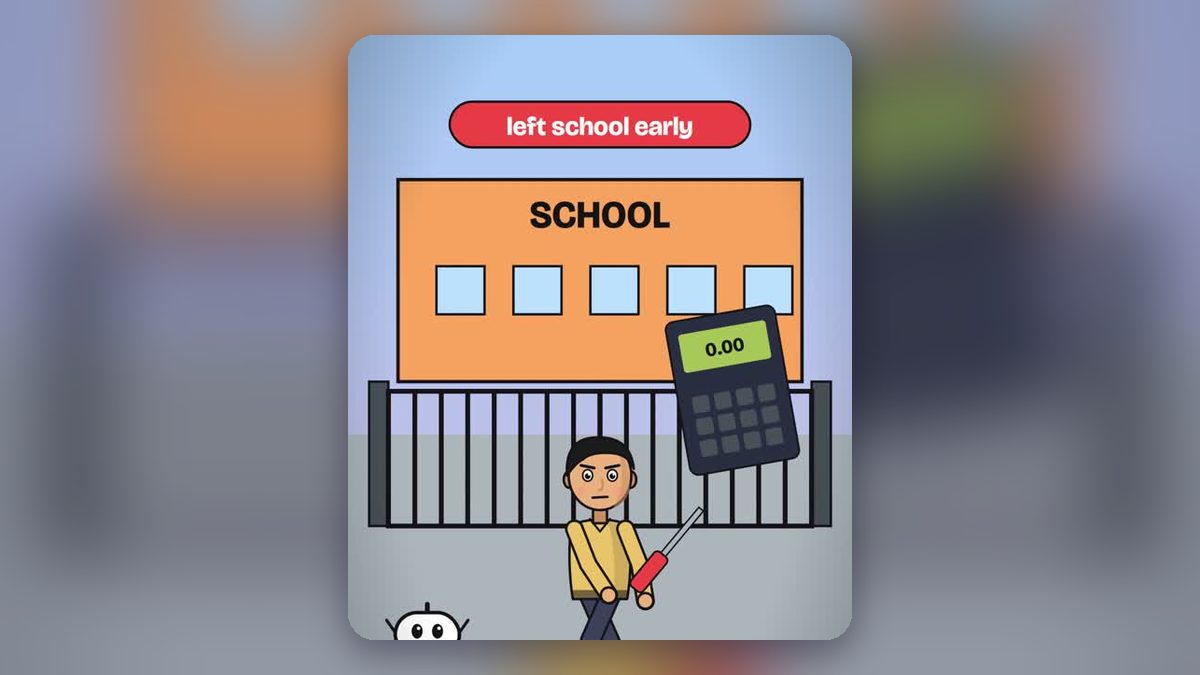
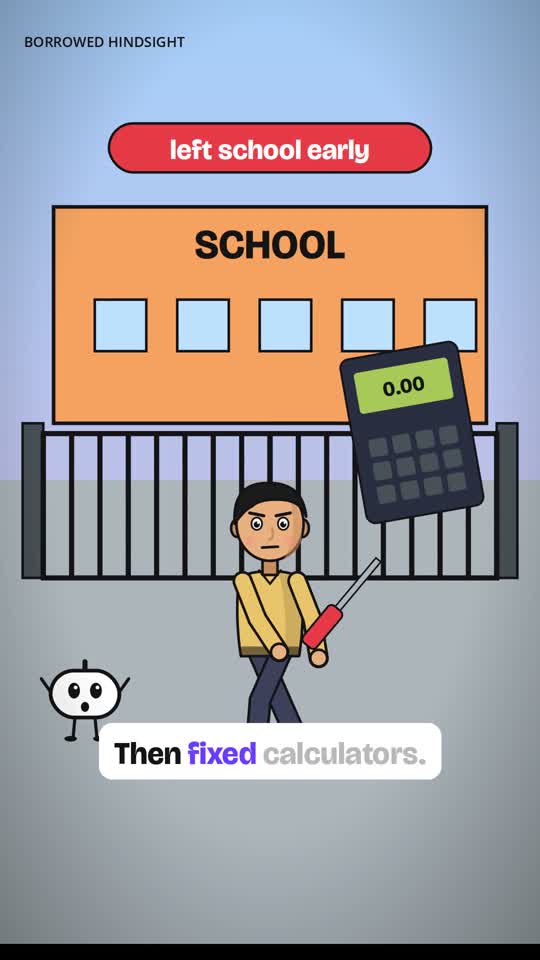
Illustration from the Borrowed Hindsight video about this story.
In this story
In the early 1990s, the computers coming into a small repair business in Pune kept arriving with the same problem. They were not broken in the usual sense. They were infected with viruses.
The man running the business, Kailash Katkar, had left school as a teenager and learned his trade repairing radios and calculators for ₹400 a month. His younger brother Sanjay, a computer science student, started writing small programs to clean the infected machines. Those programs became Quick Heal, one of India's best-known antivirus brands.
Who is Kailash Katkar?
Kailash Katkar grew up in Pune in a family of modest means. His father, according to The Better India and YourStory, worked in a factory as a machine or tool setter.
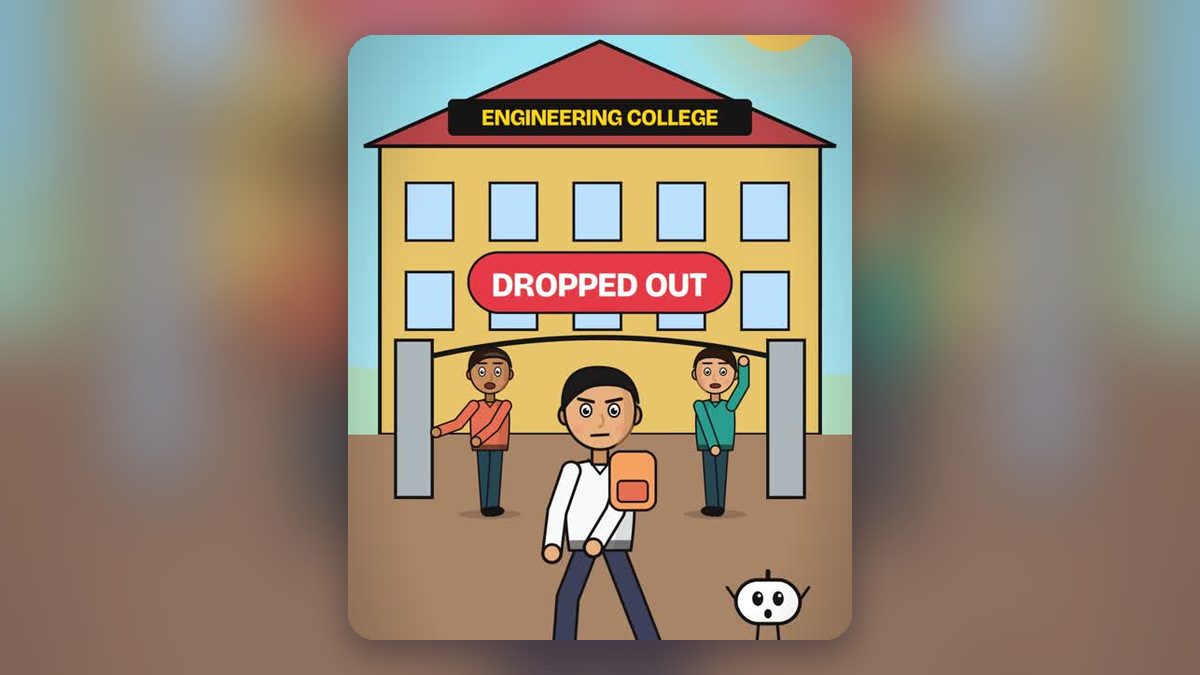
He left school early because the family needed income. Reports differ slightly on when: YourStory and DNA say he left during Class 9, while The Better India and Business Standard describe him as educated up to Class 10. Either way, he did not go on to college.
His first job was at a shop that repaired radios and calculators. YourStory and DNA both report that it paid ₹400 a month. He stayed for several years and learned the work thoroughly.
From a calculator repair shop to computers
In 1991 he opened his own repair business in Pune, putting in ₹15,000, a figure reported by The Better India, YourStory and DNA. The Better India describes it as a 100 sq ft room fixing calculators, and says the business was profitable.
He then noticed where electronics were heading. In 1993 he set up CAT Computer Services to maintain and repair computers, as The Better India, DNA and MediaNama all record.
That shift put him in front of a new problem. As Sanjay told Business Standard: "I noticed that a lot of machines, which had come for repairs, were infected with viruses."
How Sanjay Katkar wrote the first Quick Heal antivirus
Sanjay was studying computer science in Pune and spent much of his spare time at his brother's shop. In a detailed 2017 profile in YourStory, he described cleaning infected floppy disks and hard drives by hand, then writing his own small tools in the C language to remove specific viruses. New viruses kept turning up, so the tools kept multiplying.
Kailash saw that this could be more than a repair service and asked his brother to turn the tools into a proper antivirus product. The first version of Quick Heal, for the MS-DOS operating system, was launched in 1995 at ₹700, according to YourStory and DNA. The Better India dates the first program to 1994, so it was likely written in 1994 and sold from 1995.
The name, Sanjay told YourStory, came from speed: because his tools looked for a smaller set of viruses than the big international products, they cleaned machines quickly.
The hard early years
Selling software was harder than writing it. Sanjay told YourStory that for the first two years almost nobody paid for the antivirus, because copying software was so common. As he put it: "We couldn't convince people to buy anti-virus."
The brothers kept the repair business going to pay the bills. Repair workshops also helped spread the software, Sanjay recalled, by passing it on to customers. By 1998 the product had proved itself, and Kailash told Business Standard: "By 1998, we stopped hardware repairing and moved focus to anti-virus."
The going was still not easy. Kailash told The Better India the company nearly shut down in 1999, and Sanjay told YourStory he almost quit around 2001 because he could not keep developers.
How Quick Heal grew beyond Pune
From 2002 the company began expanding beyond its home city, with Business Standard and The Better India both marking that year as the turning point. The Better India reports the first branch outside Pune opened in Nashik in 2003, followed by a network of offices across India.
In 2010 the venture capital firm Sequoia Capital invested in the company, as The Better India and MediaNama report. Business Standard reports it also moved into security products for businesses around 2011-12, alongside its home antivirus software.
Kailash became managing director and CEO, while Sanjay led technology. Business Standard quoted Sanjay looking back: "When we started we never thought of making it so big. We just wanted to develop a good product."
The 2016 Quick Heal IPO
In February 2016 Quick Heal Technologies held its initial public offering. The issue of about ₹451 crore was priced at ₹321 a share and was open from 8 to 10 February, according to Business Standard and MediaNama.
The shares listed on the BSE and NSE on 18 February 2016, opening at about ₹305, roughly 5% below the issue price. For a business that began as a calculator repair room, it was a remarkable milestone: an Indian-built software product company, run by its founding brothers, listed on the country's stock exchanges.
Looking back, the order of events is the useful part. Kailash did not set out to build a software company. He went where the repair work was moving, from calculators to computers, and paid attention when the same fault kept coming through the door. The product grew out of a problem his customers already had, and his brother already knew how to fix.
The money behind it
By Manisha Aggarwal, accounting professional
Kailash Katkar put ₹15,000 into his repair business in 1991, about ₹1.3 lakh in today's money. The first Quick Heal sold in 1995 for ₹700, about ₹4,300 today. Software was expensive then, even for a small firm.
Two decades later, in 2016, the company raised about ₹451 crore in its share issue at ₹321 a share. The shares opened about 5% below that price. A modest first day does not change the underlying story: a repair shop that started with ₹15,000 became a listed company.
| Starting capital (₹15,000, 1991), in today's money | about ₹1.3 lakh |
|---|---|
| First Quick Heal price (₹700, 1995), in today's money | about ₹4,300 |
| Share issue in 2016 | about ₹451 crore at ₹321 a share |
Inflation uses India's consumer price index from the World Bank (series FP.CPI.TOTL, to 2025). Figures are rounded. General education, not financial advice.
Try it yourself: inflation calculator · growth-rate (CAGR) calculator
Timeline
- 1991Kailash Katkar opens his own repair business in Pune with ₹15,000
- 1993He starts CAT Computer Services to maintain computers
- 1995First Quick Heal antivirus for MS-DOS goes on sale at ₹700
- 1998The brothers stop hardware repair to focus on antivirus
- 2010Sequoia Capital invests in the company
- 18 Feb 2016Quick Heal Technologies lists on the BSE and NSE
Fix the problem in front of you, then ask how many other people have it. Done well, a repair job can become a product.
Your check
- What problem do people keep bringing to you?
- What would it take to fix it for a thousand people instead of one?
Watch this story in under a minute
Animated, narrated, and sourced like this page.
Questions people ask
Who founded Quick Heal?
Brothers Kailash and Sanjay Katkar from Pune. Kailash ran a computer repair business, and Sanjay, a computer science student, wrote the antivirus tools that became Quick Heal.
What did Kailash Katkar do before Quick Heal?
He left school early and worked at a radio and calculator repair shop for ₹400 a month. In 1991 he opened his own repair business in Pune with ₹15,000, and in 1993 he started CAT Computer Services.
When was the first Quick Heal antivirus launched?
The first version, for MS-DOS, went on sale in 1995 at ₹700, according to YourStory and DNA. The Better India dates the first program to 1994.
Why is it called Quick Heal?
Sanjay Katkar told YourStory that his early tools scanned for fewer viruses than big international products, so they cleaned infected machines quickly.
When did Quick Heal go public?
Quick Heal Technologies' IPO of about ₹451 crore ran from 8 to 10 February 2016 at ₹321 a share. The shares listed on 18 February 2016.
Sources
- Business Standard (2 Feb 2016): Repair shop to Quick Heal IPO, a long journey for Katkar brothers
- The Better India (13 Feb 2017): Kailash Katkar, school dropout founder of Quick Heal
- YourStory (2017): How Sanjay Katkar built India's most successful IT security firm Quick Heal
- YourStory (20 Nov 2023): Kailash Katkar and the Quick Heal success story
- DNA (1 Nov 2023): Meet Kailash Katkar, school dropout who once earned Rs 400
- MediaNama (Feb 2016): Quick Heal IPO details
- Business Standard (18 Feb 2016): Quick Heal lists 5% below issue price at Rs 305
Every fact on this page comes from the sources above, and every number is checked in at least two. General education, not personal or financial advice. Spotted an error? Tell us and we will correct it. Read our editorial standards.