Free physics lessons, a phone and a whiteboard: how PhysicsWallah became a unicorn
Alakh Pandey began posting free physics lessons on YouTube in 2016. By 2022 PhysicsWallah was a unicorn, and in 2025 it listed on the stock market.
When did Alakh Pandey start PhysicsWallah?
He started PhysicsWallah as a YouTube channel in 2016, posting free physics lessons for JEE, NEET and Class 11 and 12 students. The app and paid courses followed in May 2020.

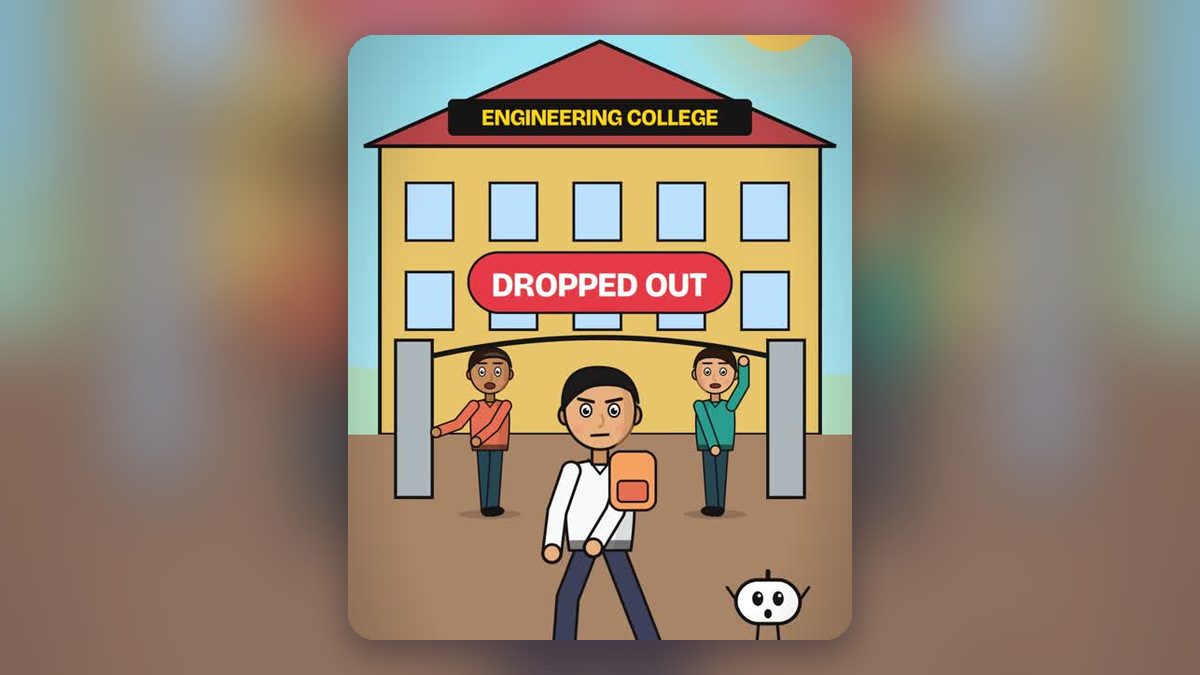
Illustration from the Borrowed Hindsight video about this story.
In this story
In 2016, a young physics teacher from Prayagraj set up a phone on a tripod, stood in front of a whiteboard and started recording lessons for YouTube. According to YourStory, that was close to the whole kit: a camera phone, a tripod, a whiteboard and a few books.
The teacher was Alakh Pandey, and the channel was called PhysicsWallah. Six years later, the company that grew out of it raised its first outside money at a valuation of $1.1 billion. In November 2025, it listed on India's stock exchanges.
Who is Alakh Pandey?
Alakh Pandey grew up in Allahabad, now Prayagraj, in Uttar Pradesh. Entrepreneur India reports that he started teaching very early, giving tuition to younger children while he was still at school himself.
He went to an engineering college in Kanpur but did not finish the course. In interviews he has described himself plainly as a college dropout who felt he had to prove himself. TechCrunch notes that he had not cleared the IIT entrance exam himself, which gave him a personal sense of what students without good coaching were up against.
Before YouTube, he taught physics at coaching institutes. That classroom experience, standing in front of real students and seeing where they got stuck, shaped the style that later made his videos popular: direct, energetic and focused on the exam syllabus.
How the PhysicsWallah YouTube channel started
Pandey started the PhysicsWallah channel in 2016, posting lessons for students preparing for the JEE and NEET entrance exams and for Class 11 and 12 physics. The videos were free. TechCrunch described the aim as helping students who could not afford premium coaching.
Growth was slow at first. Both YourStory and Entrepreneur India report that the channel took about a year to reach 10,000 subscribers. There was no marketing budget behind it, so most new viewers arrived because another student had shared a lesson with them.
He kept going anyway, recording video after video on the same simple setup. Over time he moved from classroom coaching to teaching on YouTube full-time. By 2020, TechCrunch later reported, PhysicsWallah had become the largest Indian education community on YouTube.
From a YouTube channel to an app
In May 2020, with schools and coaching centres shut by the pandemic, PhysicsWallah launched its own app for paid courses. The launch did not go smoothly. YourStory and Entrepreneur India both report that the app crashed when tens of thousands of students tried to join live classes at the same time, and the team had to fix it quickly.
Pandey had a co-founder by then: Prateek Maheshwari, who ran a small edtech firm called PenPencil and took charge of technology and business growth. The company was registered as PhysicsWallah Private Limited in 2020.
The paid courses were priced low compared with big coaching brands, and plenty of teaching stayed free on YouTube. Pandey summed up the shift in a line printed by Entrepreneur India: "Earlier, I was doing it for free and now I am doing it for a marginal amount of money."
How PhysicsWallah became a unicorn
For its first years the business ran without outside investors. In June 2022 it raised its first institutional round: $100 million from WestBridge Capital and GSV Ventures, at a valuation of $1.1 billion, as reported by Inc42 and later by Business Today. Both Inc42 and YourStory counted it as India's 101st unicorn.
The timing stood out, because the wider edtech sector was going through a hard period after the pandemic boom. YourStory reported that PhysicsWallah had been profitable since inception, with positive cash flows and reserves, which set it apart from many rivals that depended on investor money to keep running.
In September 2024 PhysicsWallah raised another $210 million, led by Hornbill Capital, which lifted its valuation to $2.8 billion. TechCrunch and Business Today both reported the round. TechCrunch, which described edtech funding as scarce at the time, noted that the company had also opened physical learning centres alongside its online classes.
Where PhysicsWallah is today
In November 2025, PhysicsWallah went public. Its initial public offering raised about ₹3,480 crore at ₹109 per share, and the shares began trading on 18 November, according to Business Standard and Business Today. On the first day the stock listed at a premium of more than 30 percent to the issue price.
The company now runs paid courses, many YouTube channels and offline centres. But its public story still begins with the same image: one teacher, a whiteboard and free lessons for students who needed them.
Why the free lessons mattered
It is easy to read this as a funding story. It is really a trust story. For years, students watched Pandey teach without paying anything, and many of them passed the lessons on to friends. By the time the app arrived, a large audience already knew his teaching and believed it worked.
He also started with what he had. He did not wait for a studio, a team or investors. He used a phone and a whiteboard, kept posting, and let the quality of the lessons do the spreading.
The money behind it
By Manisha Aggarwal, accounting professional
PhysicsWallah's first outside round, in June 2022, valued it at $1.1 billion. By September 2024 it was valued at $2.8 billion, about 2.5 times higher in just over two years.
Its share issue then raised about ₹3,480 crore at ₹109 a share. For an accountant, the interesting part is the order: years of free YouTube lessons built the audience first, and paid courses came later. The audience was the asset, even though it never appeared on a balance sheet.
| First valuation (June 2022) | $1.1 billion |
|---|---|
| Valuation in September 2024 | $2.8 billion |
| Share issue | about ₹3,480 crore at ₹109 a share |
Figures come from the sources listed below and are rounded. General education, not financial advice.
Try it yourself: inflation calculator · growth-rate (CAGR) calculator
Timeline
- 2016Alakh Pandey starts the PhysicsWallah YouTube channel with free physics lessons
- May 2020The PhysicsWallah app launches for paid courses
- June 2022Raises $100 million from WestBridge and GSV at a $1.1 billion valuation
- September 2024Raises $210 million led by Hornbill Capital at a $2.8 billion valuation
- 18 November 2025PhysicsWallah shares list on Indian stock exchanges
Give your best work away for long enough and people start bringing others to you. The trust built while teaching for free is what the company later stood on.
Your check
- What could you teach someone for free this week, with the tools you already have?
- What are you waiting for before you start, and do you really need it?
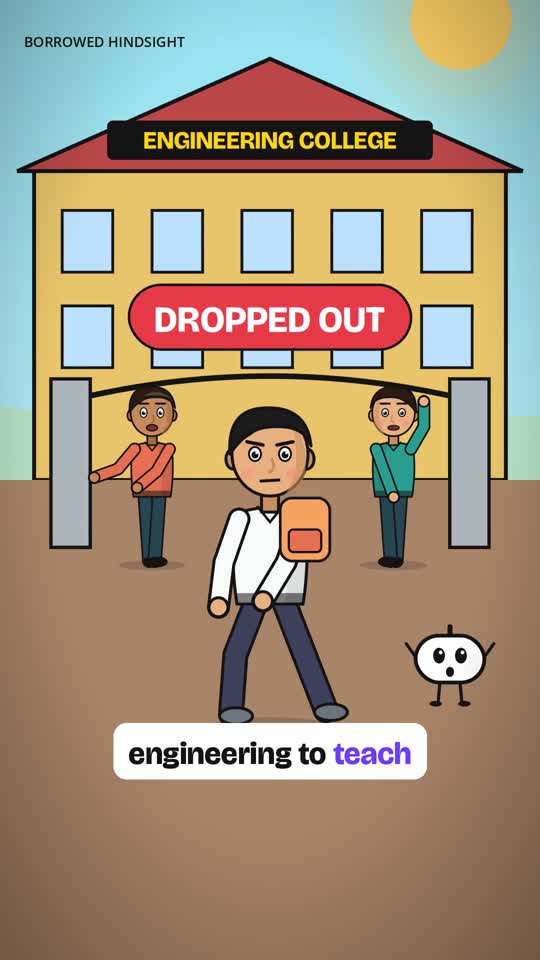
Watch this story in under a minute
Animated, narrated, and sourced like this page.
Questions people ask
When did Alakh Pandey start PhysicsWallah?
He started PhysicsWallah as a YouTube channel in 2016, posting free physics lessons for JEE, NEET and Class 11 and 12 students. The app and paid courses followed in May 2020.
When did PhysicsWallah become a unicorn?
In June 2022, when it raised $100 million from WestBridge Capital and GSV Ventures at a valuation of $1.1 billion. It was its first round of outside institutional funding.
What equipment did Alakh Pandey start with?
YourStory reports that he began with a camera phone, a tripod, a whiteboard and a few books. There was no studio or production team at the start.
Who is the co-founder of PhysicsWallah?
Prateek Maheshwari is the co-founder. He ran an edtech firm called PenPencil and led technology and business growth at PhysicsWallah.
Is PhysicsWallah a listed company?
Yes. PhysicsWallah's shares began trading on Indian stock exchanges on 18 November 2025, after an IPO priced at ₹109 per share.
Sources
- YourStory (June 2022): How Alakh Pandey mined his passion for teaching to build edtech unicorn PhysicsWallah
- Entrepreneur India: The Unicorn Youtuber: Alakh Pandey
- Inc42 (7 June 2022): PhysicsWallah becomes India's 101st unicorn, raises $100 Mn
- TechCrunch (19 September 2024): India's Physics Wallah raises $210M at $2.8B valuation
- Business Today (20 September 2024): PhysicsWallah raises $210 mn amid challenging times for edtech sector
- Business Standard (17 November 2025): PhysicsWallah IPO to list on November 18
- Business Today (18 November 2025): PhysicsWallah shares stage strong market debut with 33% listing premium
Every fact on this page comes from the sources above, and every number is checked in at least two. General education, not personal or financial advice. Spotted an error? Tell us and we will correct it. Read our editorial standards.