From ticket collector to the World Cup-winning six: MS Dhoni
MS Dhoni once checked train tickets at Kharagpur station and played for the railway team. In 2011 he hit the six that won India the World Cup.
Was MS Dhoni a ticket collector?
Yes. MS Dhoni worked as a travelling ticket examiner for South Eastern Railway at Kharagpur, reportedly from 2001 to 2004. In 2011 he scored 91 not out in the World Cup final and hit the winning six.

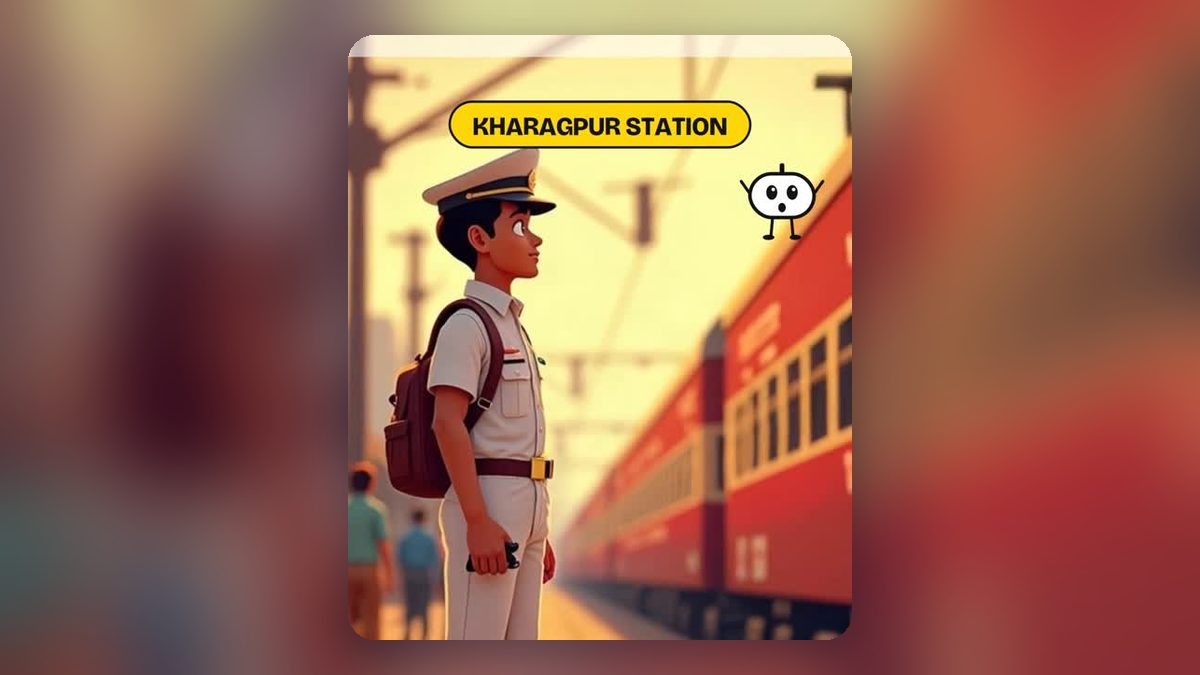
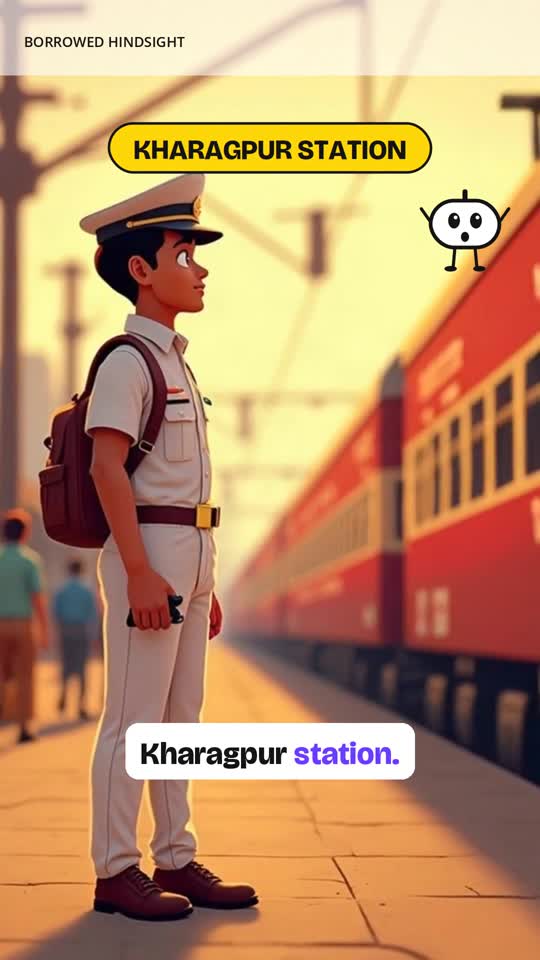
Illustration from the Borrowed Hindsight video about this story.
In this story
On the night of 2 April 2011, at Wankhede Stadium in Mumbai, India needed four runs from 11 balls to win the World Cup. Their captain swung the ball over long-on for six, and the country had its first 50-over world title in 28 years.
Less than a decade earlier, that captain had been checking passengers' tickets on trains out of Kharagpur, a railway town in West Bengal. Mahendra Singh Dhoni's road to that six ran through a government job, a railway cricket team and a lot of patient waiting.
Was MS Dhoni a ticket collector?
Yes. Dhoni, who grew up in Ranchi, worked as a travelling ticket examiner (TTE) for South Eastern Railway, based at Kharagpur station. Deccan Chronicle reported that he held the job from September 2001 to July 2004, before he made the Indian team. Deccan Herald put his stay in Kharagpur at about four years.
The work was ordinary. A TTE checks tickets and reservations on trains, often on long shifts. Deccan Herald reported that he carried out these duties with integrity, and that it was hard for people who later watched him lead India to imagine him walking down train corridors with a ticket chart.
How cricket came with the railway job
The job and the cricket were linked. Deccan Herald reported that Dhoni was hired by South Eastern Railway through its Divisional Railway Manager, a cricket fan, and that he became an integral part of the railway's cricket team.
He had already played age-group cricket before arriving. According to Deccan Herald, he had represented Bihar in the Cooch Behar Trophy, an Under-19 competition. In Kharagpur he kept playing as much as he could, including in local tennis-ball tournaments, while holding down his railway duties.
None of this was glamorous. Kharagpur was far from the big cricket centres, and there was no famous academy behind him. What he had was a steady income, regular matches and the chance to keep improving.
From Kharagpur to the Indian team
Dhoni left the railway in 2004, and late that year he was picked for India's tour of Bangladesh. His start was not promising. In his first one-day international, in December 2004, he was run out without scoring, as both the ICC and India TV recall.
He did not have to wait long for his breakthrough. A few months later, in 2005, he made his first international century against Pakistan at Visakhapatnam. India TV reported that later the same year he made 183 not out against Sri Lanka in Jaipur, which the ICC lists as the highest ODI score by a wicketkeeper in men's cricket.
In 2007 he was given the captaincy for the first ICC World Twenty20. India, with a young side, won the tournament by beating Pakistan in the final, according to the ICC and India TV.
The 2011 World Cup final: Dhoni's 91 not out
Four years later India reached the 50-over World Cup final against Sri Lanka at home. Sri Lanka made 274 for six in their 50 overs, built around an unbeaten century from Mahela Jayawardene, according to the BCCI match report and the ESPNcricinfo scorecard.
India's chase started badly. Virender Sehwag was out on the second ball, and Sachin Tendulkar fell in the seventh over, as Wisden and the BCCI both describe. Gautam Gambhir steadied the innings with 97.
Then Dhoni made an unexpected call. Wisden reported that he promoted himself to No. 5, ahead of the in-form Yuvraj Singh, partly because he expected Sri Lanka's off-spinners to trouble the two left-handers. It was a risk, because Dhoni himself had not scored many runs earlier in the tournament and had not yet played a big innings.
It worked. Dhoni finished on 91 not out from 79 balls, with eight fours and two sixes. The last of those sixes, off Nuwan Kulasekara, won the match. India won by six wickets with 10 balls to spare, and Dhoni was named player of the match, as the ESPNcricinfo scorecard and the BCCI record.
What came after the World Cup
In 2013 Dhoni led India to the ICC Champions Trophy as well. The ICC describes him as the only captain to win all three of its men's white-ball titles: the T20 World Cup, the 50-over World Cup and the Champions Trophy.
He played his last match for India in the 2019 World Cup semi-final against New Zealand, and retired from international cricket more than a year later. The ICC describes it as a career of 16 years, in which he was captain, wicketkeeper and batter.
Why the ticket collector story matters
The story is popular in India because it is so ordinary at the start. A steady job at a railway station did not stop him; it gave him a base from which to keep practising and playing until the bigger chance came. Where you start does not decide where you finish, but what you keep doing in the meantime often does.
It is also a reminder that a job and a dream do not always have to compete. For about three years, Dhoni did both: he checked tickets, collected a salary, and used the railway team as his training ground. When the call came from the national selectors, he was ready for it.
Timeline
- 2001Joins South Eastern Railway as a travelling ticket examiner at Kharagpur
- 2004Leaves the railway job; makes his ODI debut against Bangladesh in December
- 2005Scores his first international century, against Pakistan at Visakhapatnam
- 2007Captains India to victory in the first ICC World Twenty20
- 2 April 2011Hits the winning six in the World Cup final; finishes on 91 not out
- 2013Leads India to the ICC Champions Trophy title
- 2019Plays his last match for India, the World Cup semi-final
Where you start is not where you stay. Keep practising while you wait, so you are ready when the chance arrives.
Your check
- Where are you starting from today, and what does that position let you practise?
- What is one thing you can keep doing every week while you wait for your chance?
Questions people ask
Was MS Dhoni a ticket collector?
Yes. He worked as a travelling ticket examiner (TTE) for South Eastern Railway at Kharagpur, West Bengal, and played for the railway's cricket team. Deccan Chronicle dates the job from 2001 to 2004.
How many runs did Dhoni score in the 2011 World Cup final?
He scored 91 not out from 79 balls against Sri Lanka at Wankhede Stadium, Mumbai, on 2 April 2011, with eight fours and two sixes.
How did India win the 2011 World Cup final?
Chasing 275, India recovered from early wickets through Gautam Gambhir's 97 and Dhoni's 91 not out. Dhoni hit a six off Nuwan Kulasekara to win by six wickets with 10 balls to spare.
Why did Dhoni bat ahead of Yuvraj Singh in the 2011 final?
According to Wisden, he promoted himself to No. 5 because he expected Sri Lanka's off-spinners to trouble the left-handed Gambhir and Yuvraj. He had scored few runs earlier in the tournament.
When did MS Dhoni make his India debut?
He made his one-day international debut against Bangladesh in December 2004 and was run out without scoring.
Sources
- Deccan Herald: From ticket collector Dhoni to World Cup-winning captain
- Deccan Chronicle (February 2017): Ticket collector back on board
- ESPNcricinfo: India vs Sri Lanka, Final at Mumbai, 2 April 2011 (scorecard)
- BCCI: Match report, India v Sri Lanka, 2011 CWC final
- Wisden: Men's ODI innings of the decade, No. 4: MS Dhoni
- ICC: MS Dhoni, a captain, wicketkeeper and batter beyond numbers
- India TV (December 2019): 15 years of MS Dhoni's debut
Every fact on this page comes from the sources above, and every number is checked in at least two. General education, not personal or financial advice. Spotted an error? Tell us and we will correct it. Read our editorial standards.