Eighteen years old, twenty thousand rupees, Ludhiana: how Sunil Mittal got to Airtel
In 1976, 18-year-old Sunil Mittal borrowed ₹20,000 from his father to make bicycle parts in Ludhiana. A ban, a trade fair and a phone later, came Airtel.
How did Sunil Mittal start his business?
In April 1976, at 18, he borrowed ₹20,000 and started a small business in Ludhiana making bicycle crankshafts for local bicycle manufacturers.

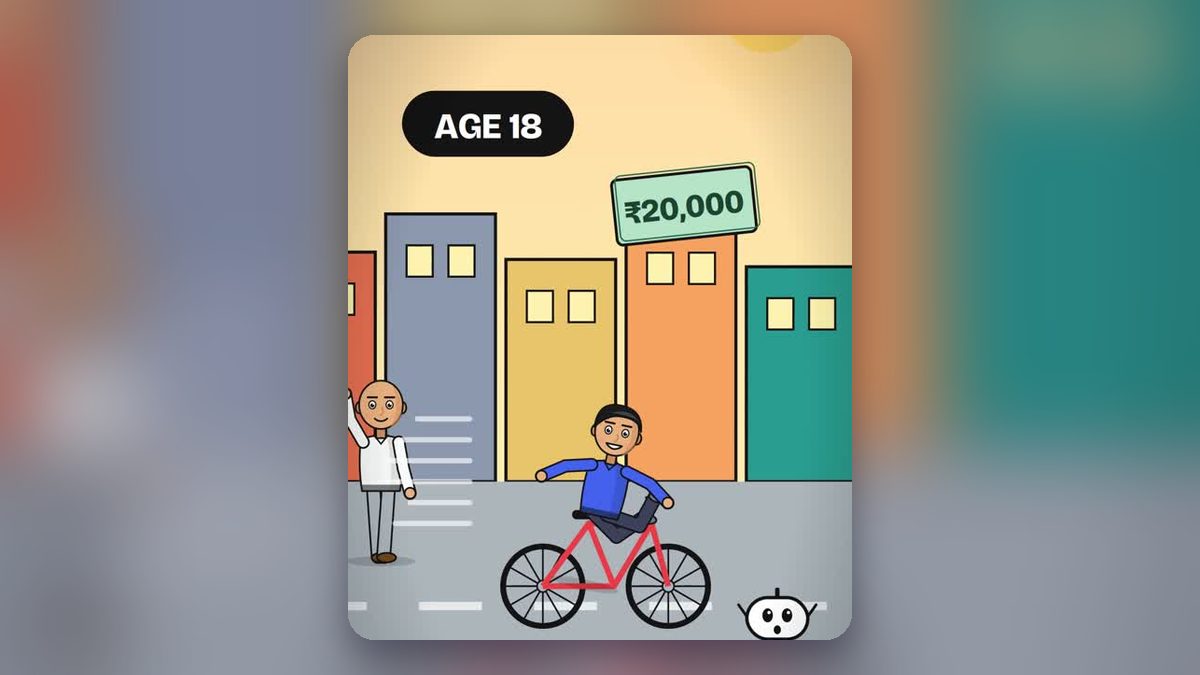
Illustration from the Borrowed Hindsight video about this story.
In this story
- Who is Sunil Bharti Mittal?
- How Sunil Mittal started: ₹20,000 and bicycle crankshafts
- The move to Bombay and the generator business
- From a Taiwan trade fair to telephones
- The 1992 mobile licence and the launch of Airtel
- Why each small business mattered
- The money behind it
- Timeline
- The borrowed hindsight
- Questions people ask
- Sources
In the early 1980s, Sunil Mittal had a business that was working. He was importing portable generators from Japan and selling them across India. Then the government banned their import. In his own words to Knowledge at Wharton: "One fine day, there was no business."
He was in his mid-twenties, and it was not the first time he had started from scratch. It would also be the setback that pushed him, step by step, towards the telephone business that became Bharti Airtel.
Who is Sunil Bharti Mittal?
Sunil Bharti Mittal grew up in Ludhiana, Punjab, a city known for its small factories and workshops. He called it "a very industrious town" and "the bedrock of small-scale industry" in a 2008 interview with Knowledge at Wharton, the business journal of the Wharton School.
He is the founder and chairman of the Bharti group, best known for Bharti Airtel, one of India's largest mobile networks, with operations across South Asia and Africa. But his story begins far from mobile phones. The path from a Ludhiana workshop to that company ran through three very different businesses, and one of them was shut down by a single government decision.
How Sunil Mittal started: ₹20,000 and bicycle crankshafts
In April 1976, at 18, Mittal borrowed ₹20,000 and started his first business in Ludhiana, making parts for the city's bicycle makers. Business Insider India, India TV and domain-b all report the ₹20,000 figure and the bicycle business; Udayavani adds that the money came from his father and friends.
He described the product himself to Knowledge at Wharton: "I decided to manufacture bicycle parts, in particular crankshafts." India TV likewise reports that he made crankshafts for local bicycle manufacturers.
It was a real business, but he soon saw its limits. The big bicycle companies set the prices, and as he told Wharton, "just making shafts wouldn't have made you a player of any size or scale."
The move to Bombay and the generator business
So he left. "It was very clear that I had to get out of Ludhiana into a much bigger place, Delhi or Mumbai — Bombay at that time," he told Wharton. Accounts of the timing vary between 1980 and 1982.
In Bombay he turned to trading imported goods. His main product was portable generators made by Suzuki in Japan, which Knowledge at Wharton and India TV both describe. Business Insider India and Udayavani describe it as a full-scale business selling generators imported from Japan.
Then the rules changed. The government banned generator imports and gave licences to two Indian companies to make them locally, as Business Insider India and Udayavani report. India TV and domain-b date the ban to 1983. His business disappeared almost overnight.
From a Taiwan trade fair to telephones
Mittal did not wait for the rules to change back. He went back to Japan, Korea and Taiwan looking for a new product, ideally one that larger Indian companies were not already making, as he explained to Wharton.
At a trade fair in Taiwan he found it: push-button telephones. Indian homes still used rotary-dial phones, and he brought in what he describes as India's first push-button telephone set. India TV reports the phones were sold under the Beetel brand.
Telephone equipment led to a technical partnership with the German company Siemens, according to both domain-b and the ICMR case study on Airtel, and in the early 1990s the group also launched some of India's first fax machines and cordless phones, as India TV and Udayavani report.
The 1992 mobile licence and the launch of Airtel
When India began opening mobile telephony to private companies, Mittal decided to compete. He told Wharton he was bidding for a mobile licence "against all odds — in 1992, when I was a rank outsider." Udayavani and India TV both report that Bharti won the right to build a cellular network in Delhi in 1992.
It was a bold move for a company whose experience was in making and selling telephone handsets, not running networks. But each earlier venture had given Mittal something he now needed: an eye for products India did not yet have, experience with foreign technology partners, and a habit of moving quickly when an opening appeared.
The service launched in 1995 under the Airtel brand. The ICMR case study dates the Delhi launch to November 1995, and India TV also places the launch of Bharti Cellular's Airtel service in 1995.
From one city, the network spread across India through new licences and acquisitions, and later into other countries. Udayavani reports that in 2005 Airtel launched its first international mobile network, in Sri Lanka.
Why each small business mattered
Looked at in hindsight, none of Mittal's early ventures was wasted. The crankshaft workshop taught him manufacturing, pricing and dealing with bigger customers. The generator trade taught him imports, distribution and how quickly a government decision can wipe out a business.
That last lesson might have ended his career. Instead it sent him looking for a new product, and the one he found happened to be at the start of India's telecom boom. His own advice, given to Wharton, sums up the approach: "If you're caught between speed and perfection, always choose speed, and perfection will follow."
The money behind it
By Manisha Aggarwal, accounting professional
Sunil Mittal's ₹20,000 from 1976 is worth about ₹6.3 lakh in today's money. That is a serious sum for an 18-year-old, but it is roughly what a small trader might put into a shop today, not venture capital.
As an accountant, what stands out is that it was borrowed, from his father. Borrowed money has to come back, which forces a business to sell something early. A bicycle-parts workshop does exactly that: small, steady orders that pay the loan, long before anything as ambitious as a phone network.
| ₹20,000 in 1976, in today's money | about ₹6.3 lakh |
|---|---|
| How much prices rose, 1976 to 2025 | about 31 times |
Inflation uses India's consumer price index from the World Bank (series FP.CPI.TOTL, to 2025). Figures are rounded. General education, not financial advice.
Try it yourself: inflation calculator · growth-rate (CAGR) calculator
Timeline
- 1976At 18, Sunil Mittal borrows ₹20,000 and starts making bicycle crankshafts in Ludhiana (April)
- 1980-82Moves to Bombay and builds a business importing Suzuki portable generators
- 1983The government bans generator imports, ending that business
- 1992Bharti wins the bid to build a mobile network in Delhi
- 1995Airtel mobile service launches in Delhi
- 2005Airtel launches its first international mobile network, in Sri Lanka
A small first business teaches you the big one, and a closed door is often the start of the next search.
Your check
- What small business could you start with what you have now?
- When a door last closed on you, did you go looking for the next one, or wait for the old one to reopen?
Questions people ask
How did Sunil Mittal start his business?
In April 1976, at 18, he borrowed ₹20,000 and started a small business in Ludhiana making bicycle crankshafts for local bicycle manufacturers.
What happened to Sunil Mittal's generator business?
In the early 1980s he imported Suzuki portable generators from Japan and sold them in India. The government then banned generator imports, reportedly in 1983, and gave local manufacturing licences to two Indian companies, ending his business.
How did Sunil Mittal get into telecom?
After the generator ban he found push-button telephones at a trade fair in Taiwan and brought them to India, which replaced rotary phones. That led to telephone equipment, a partnership with Siemens, and then a bid for a mobile licence.
When did Airtel start mobile services?
Bharti won the bid to build a cellular network in Delhi in 1992, and the Airtel mobile service launched in Delhi in 1995.
What is Sunil Mittal's advice to entrepreneurs?
He told Knowledge at Wharton: "If you're caught between speed and perfection, always choose speed, and perfection will follow."
Sources
- Knowledge at Wharton (10 Jul 2008): Bharti Group's Sunil Bharti Mittal on lessons of entrepreneurship and leadership
- Business Insider India (15 Aug 2016): The Airtel story
- India TV: 15 interesting facts about Sunil Bharti Mittal
- domain-b (Nov 2004): Profile, an earnest entrepreneur
- Udayavani: How Sunil Mittal went from owning a bicycle business to becoming telecom czar
- ICMR case study: Airtel, positioning and repositioning
Every fact on this page comes from the sources above, and every number is checked in at least two. General education, not personal or financial advice. Spotted an error? Tell us and we will correct it. Read our editorial standards.