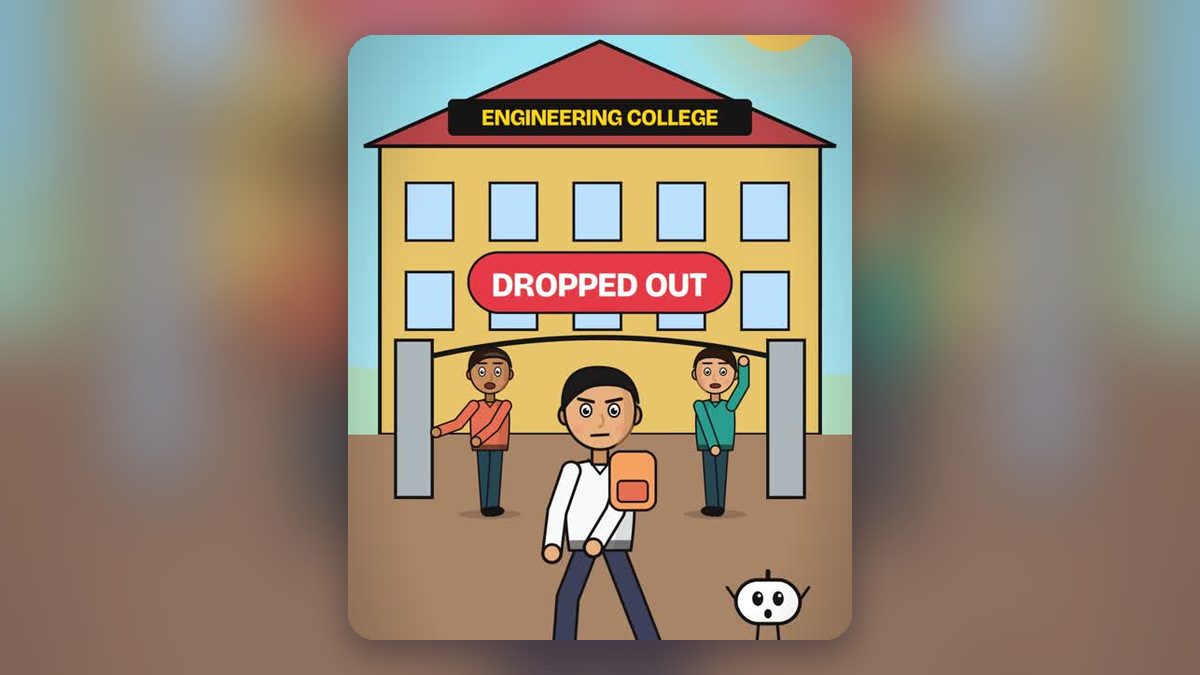
Homemade detergent at ₹3 a kilo: how Karsanbhai Patel's Nirma beat the big brands
In 1969 lab technician Karsanbhai Patel mixed detergent in his backyard and sold it door to door at about ₹3 a kilo. Nirma went on to overtake Surf.
Who founded Nirma?
Karsanbhai Patel (also spelled Karshanbhai Patel), a chemistry graduate who worked as a lab technician in Gujarat, started Nirma in 1969 by making detergent powder in his backyard near Ahmedabad.

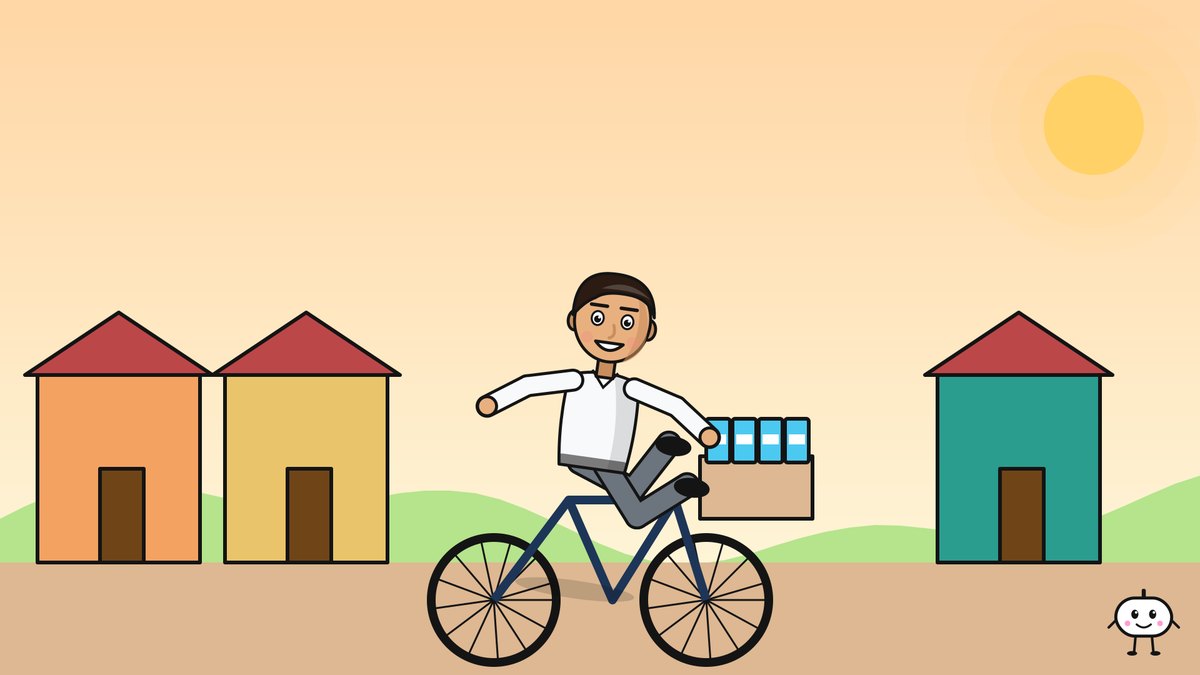
Illustration: a man cycling through a village lane with a basket of detergent packets.
In this story
In 1969, a government lab technician in Gujarat started mixing detergent powder by hand in the backyard of his home near Ahmedabad. After work, he packed it into simple packets and sold it door to door, cycling from one neighbourhood to the next.
The big detergent brands of the day cost around ₹13 a kilo. His cost about ₹3. Within roughly a decade, that homemade powder, Nirma, had overtaken Hindustan Lever's Surf, then the leading brand in India.
Who is Karsanbhai Patel?
Karsanbhai Patel was born in 1945 into a farming family in Gujarat. He studied chemistry and earned a BSc, which led to a job as a lab technician at New Cotton Mills in Ahmedabad, part of the Lalbhai group.
He later moved to the Gujarat government's Department of Geology and Mining, again working in a laboratory. It was a steady, modest job. Nothing about it suggested he would one day build one of India's best-known consumer brands.
How Nirma started in a backyard
In the late 1960s, washing powder was a premium product in India. Most households washed clothes with bar soap, and the main detergent brands were sold by large multinational companies to better-off buyers.
Patel used his chemistry training to make a detergent powder of his own. He mixed it in the backyard of his house in Khokra, near Ahmedabad, and packed it by hand. He named it after his daughter, Nirupama.
He did not quit his job to do this. Nirma began as a side venture, and Patel sold it himself, cycling through neighbourhoods and selling packets door to door. He left government service only once the product had become popular.
Why Nirma was priced at ₹3 a kilo
Price was the whole idea. Nirma's own company history says the powder sold at ₹3 a kilo when the cheapest competing brand cost ₹13. Most accounts give the same figures, though Business Today puts Nirma's starting price slightly higher, at ₹3.50 a kilo.
Either way, it cost roughly a quarter to a third of what the established brands charged. Patel kept costs low by keeping production, packaging and distribution simple. For millions of families who had never bought detergent powder, Nirma made it affordable for the first time.
How Nirma beat Surf
The low price opened up a market the big brands had largely ignored: lower-income households in small towns and villages. As demand spread beyond Ahmedabad, Nirma grew from a one-man business into a regional, then national, brand.
Advertising helped it go national in the 1980s. The television jingle ending in "Sabki Pasand Nirma" and the image of a little girl, known as the Nirma Girl, became among the most recognisable in Indian advertising. The girl on the pack was based on Patel's daughter.
In the 1980s, Nirma overtook Surf to become India's largest-selling detergent. Hindustan Lever, which made Surf, eventually answered with its own low-priced detergent, Wheel. When a giant copies a newcomer's strategy, that is a sign the newcomer got something important right.
The low-price model was not a permanent shield, though. A 2014 report in Retail4Growth noted that Wheel and later Ghadi, another value detergent, competed with Nirma on price in the 2000s, and that Nirma's share of a crowded market had fallen. The same strategy that lifted Nirma could be copied by others.
What Nirma became
From detergent, the business expanded into toilet soaps and other consumer products, and later into industrial materials such as soda ash, one of the raw materials used in making detergent. Nirma's company site says it runs eleven production facilities.
The group grew into a large employer. Both the company's own site and DNA India put its workforce at around 18,000 people, and Patel's son Hiren Patel later took on a leading role in the business, including the effort to refresh the Nirma brand for a new generation of shoppers.
In July 2016, Nirma agreed to buy Lafarge India's cement business from LafargeHolcim at an enterprise value of about $1.4 billion. Patel also turned to education, founding the Nirma Institute of Technology in Ahmedabad in 1995, which became part of Nirma University in 2003.
In 2010 the Government of India awarded him the Padma Shri, one of the country's highest civilian honours.
What Karsanbhai Patel understood early
Patel did not try to beat the big brands at their own game. He did not compete for the same affluent shoppers with fancier packaging or bigger advertising budgets, at least not at first. He served the much larger group of people those brands had priced out.
He also tested his idea without risking everything. He kept his job, made the product himself, sold it with his own hands, and went full time only after people kept buying. The overlooked market turned out to be the biggest one.
None of this needed a big idea or a large investment at the start. It needed a clear view of who was being left out, a product priced for them, and the patience to grow one neighbourhood at a time.
The money behind it
By Manisha Aggarwal, accounting professional
In 1969 Nirma sold at ₹3 a kilo when the cheapest rival cost ₹13. In today's money that is about ₹160 against about ₹690. Nirma was about 77% cheaper.
A price that low only works with very low costs. Patel made the powder himself, had no shop and no advertising at first, and sold door to door by bicycle while keeping his day job. As an accountant, I see a business that kept its overheads near zero until sales could carry them.
| Nirma's price (₹3 a kilo, 1969), today | about ₹160 |
|---|---|
| Rival brand (₹13 a kilo), today | about ₹690 |
| Price advantage | about 77% cheaper |
| Lafarge India cement purchase (2016) | about $1.4 billion |
Inflation uses India's consumer price index from the World Bank (series FP.CPI.TOTL, to 2025). Figures are rounded. General education, not financial advice.
Try it yourself: inflation calculator · growth-rate (CAGR) calculator
Timeline
- 1945Karsanbhai Patel is born into a farming family in Gujarat
- 1969Starts making Nirma detergent in his backyard and selling it door to door
- 1980sNirma overtakes Surf to become India's largest-selling detergent
- 1995Founds the Nirma Institute of Technology in Ahmedabad
- 2003Nirma University is established
- 2010Awarded the Padma Shri
- 2016Nirma agrees to buy Lafarge India's cement business for about $1.4 billion
Build for the people the big players ignore. An overlooked market can turn out to be the biggest one.
Your check
- Who is your idea really for, and who is everyone else ignoring?
- What is the smallest way you could test it while you still have your job?

Questions people ask
Who founded Nirma?
Karsanbhai Patel (also spelled Karshanbhai Patel), a chemistry graduate who worked as a lab technician in Gujarat, started Nirma in 1969 by making detergent powder in his backyard near Ahmedabad.
How much did Nirma cost when it started?
Nirma's company history says it sold at ₹3 a kilo when the cheapest competing brand cost ₹13. Business Today gives a slightly higher starting price of ₹3.50.
How did Karsanbhai Patel sell Nirma?
He sold it himself, cycling through neighbourhoods and selling packets door to door, while still working his government job.
Who is Nirma named after?
The brand is named after Karsanbhai Patel's daughter, Nirupama. The girl on the pack and in the famous TV advertisements was based on her.
When did Nirma overtake Surf?
In the 1980s, Nirma overtook Hindustan Lever's Surf to become India's largest-selling detergent, roughly a decade after it started.
Sources
- Nirma Ltd, Genesis (company history)
- YourStory (August 2016), From selling door to door detergent to 'Sabki Pasand Nirma': Karsanbhai Patel's incredible story
- Business Today (9 October 2023), From selling detergent door to door on his bicycle to competing with Unilever and P&G: meet Nirma founder Karsanbhai Patel
- Retail4Growth (6 November 2014), 40 years ago...and now: Nirma girl endears, but brand's seen better days
- DNA India, Meet man, a farmer's son who quit govt job to sell detergents on cycle
- Business Standard (11 July 2016), LafargeHolcim says agrees to sell Lafarge India to Nirma Ltd for $1.4 billion
Every fact on this page comes from the sources above, and every number is checked in at least two. General education, not personal or financial advice. Spotted an error? Tell us and we will correct it. Read our editorial standards.